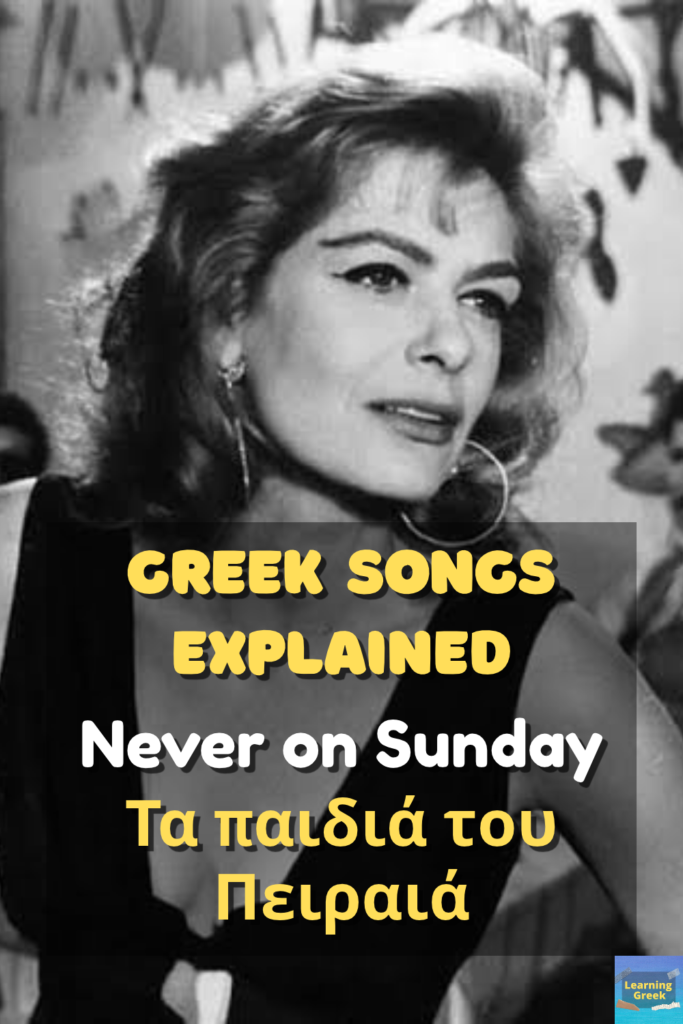

Hello, my lovely Greek learners! If there is one Greek song that has travelled around the world, crossed generations and become part of Greece’s international identity, it is probably Never on Sunday. Even people who don’t speak Greek recognise its cheerful melody, often without knowing where it came from.
But did you know that Never on Sunday was originally called Τα Παιδιά του Πειραιά? And that it won an Academy Award, making Greek music part of international film history?
Written by the legendary Μάνος Χατζιδάκις (Mános Hatzidákis) and performed by the wonderful Μελίνα Μερκούρη (Melína Merkoúri), this song became an international hit and introduced audiences around the world to a little piece of Greek musical culture.
However, there’s something particularly interesting about Never on Sunday: the original Greek lyrics are quite different from the English version! While the international version talks about not wanting to work on Sundays, the Greek original celebrates the beauty, atmosphere and people of Piraeus.
So today, we’re going to explore the story behind Never on Sunday, understand what the original Greek lyrics mean and, of course, learn some Greek along the way!
Listen to Never on Sunday
Before we start, let’s listen to the original Greek version of Never on Sunday, performed by Melina Mercouri.
Don’t worry if you don’t understand everything. Just enjoy the music, listen to the pronunciation and see if you can recognise any Greek words.
Now that you’ve heard the original version, let’s look at the story behind this famous Greek song and find out how it conquered the world!
The Story Behind Never on Sunday
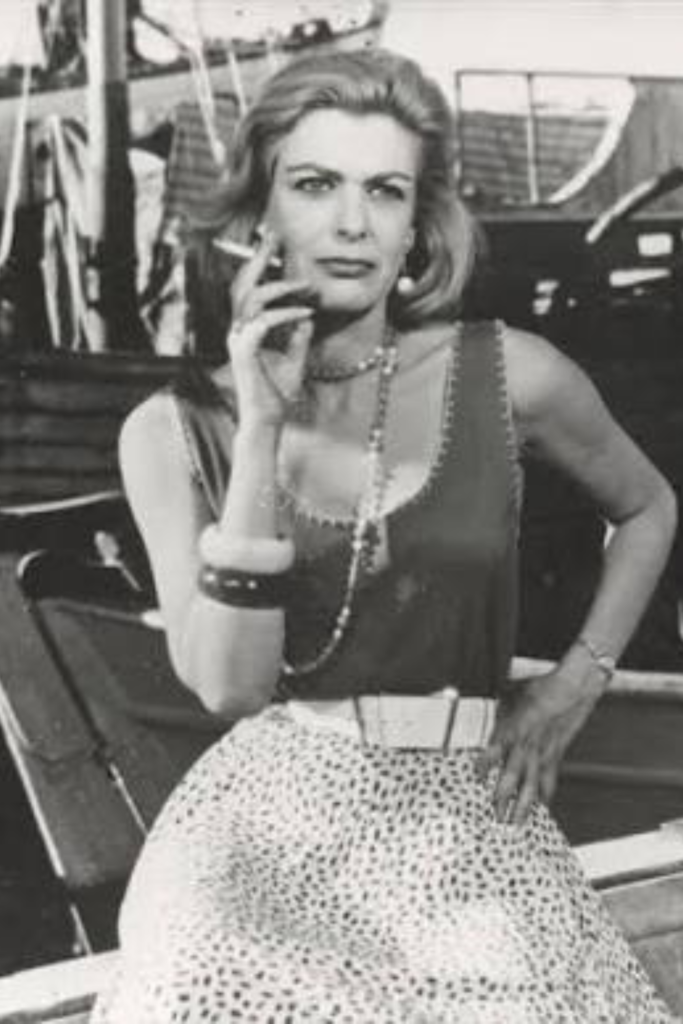
The story begins with the 1960 Greek-American film Never on Sunday (Ποτέ την Κυριακή), written and directed by Jules Dassin and starring the unforgettable Greek actress Melina Mercouri.
The film takes place in Piraeus, the historic port city near Athens. Mercouri plays Illya, a cheerful, independent and free-spirited woman who loves her city, enjoys life and refuses to let other people tell her how to live.
Meanwhile, an American visitor named Homer arrives in Greece, fascinated by ancient Greek civilisation. When he meets Illya, he decides that he wants to change her way of life. However, their very different ideas about happiness, freedom and Greek culture lead to a series of humorous situations.
The film became an international success. In fact, Melina Mercouri received the Best Actress Award at the 1960 Cannes Film Festival.
However, audiences around the world would remember something else from the film: its music.
Manos Hadjidakis composed the music and wrote the original Greek lyrics of Never on Sunday. Melina Mercouri performed the song in the film, giving it her unmistakable voice and personality.
In 1961, the song received the Academy Award for Best Original Song at the 33rd Academy Awards. It was an extraordinary achievement for Greek music!
Interestingly, the English lyrics were written separately by Billy Towne. Rather than being a direct translation of the original Greek lyrics, they were adapted to the international film title.
And that’s why the two versions tell rather different stories!
From Piraeus to the Whole World
Following the film’s success, Never on Sunday was recorded in dozens of languages, including French, German, Italian, and Spanish. American musician Don Costa released a famous instrumental version, and the American vocal group The Chordettes hit the Billboard charts with their English vocal version in 1961.
Over the decades, artists from Nana Mouskouri to Pink Martini have covered it, though for most Greeks, nothing compares to Mercouri’s original.
Full Lyrics & English Translation of Never on Sunday
Before diving deeper into the lyrics, let’s first look at the English translation of the song to understand its meaning.
| Greek | English |
|---|---|
| Απ’ το παράθυρό μου στέλνω | From my window, I send |
| Ένα, δύο και τρία και τέσσερα φιλιά | One, two, three and four kisses |
| Που φτάνουν στο λιμάνι | That reach the harbor |
| Ένα και δύο και τρία και τέσσερα πουλιά | One, two, three and four birds |
| Πώς ήθελα να έχω ένα και δύο | How I wish I had one and two |
| Και τρία και τέσσερα παιδιά | And three and four children |
| Που σαν θα μεγαλώσουν όλα | Who, when they all grow up |
| Να γίνουν λεβέντες για χάρη του Πειραιά | Will become fine, brave young men for the love of Piraeus |
| Όσο κι αν ψάξω, δεν βρίσκω άλλο λιμάνι | No matter how much I search, I can’t find another harbor |
| Τρελή να με ‘χει κάνει, όσο τον Πειραιά | That has made me as crazy in love as Piraeus has |
| Που όταν βραδιάζει, τραγούδια μ’ αραδιάζει | Where, when evening falls, it fills me with songs |
| Και τις πενιές του αλλάζει, γεμίζει από παιδιά | And changes its bouzouki tunes, filling up with young people |
| Από την πόρτα μου σαν βγω | When I step out of my door |
| Δεν υπάρχει κανείς που να μην τον αγαπώ | There isn’t anyone I don’t love |
| Και σαν το βράδυ κοιμηθώ, ξέρω πως | And when I fall asleep at night, I know that |
| Ξέρω πως θα τον ονειρευτώ | I know I will dream of him |
| Πετράδια βάζω στο λαιμό | I put jewels around my neck |
| Και μια χά-, και μια χάντρα φυλακτό | And a bea-, and a bead as a good-luck charm |
| Γιατί τα βράδια καρτερώ, στο λιμάνι σαν βγω | Because at night I wait hopefully, when I go down to the harbor |
| Κάποιον άγνωστο να βρω | To meet someone I don’t know |
| Όσο κι αν ψάξω, δεν βρίσκω άλλο λιμάνι | No matter how much I search, I can’t find another harbor |
| Τρελή να με ‘χει κάνει, όσο τον Πειραιά | That has made me as crazy in love as Piraeus has |
| Που όταν βραδιάζει, τραγούδια μ’ αραδιάζει | Where, when evening falls, it fills me with songs |
| Και τις πενιές του αλλάζει, γεμίζει από παιδιά | And changes its bouzouki tunes, filling up with young people |
What Do Τα Παιδιά του Πειραιά Actually Mean?
Let’s start with the original Greek title.
Τα Παιδιά του Πειραιά (Ta Pediá tou Pireá) literally means The Children of Piraeus. However, παιδιά can also refer to young people or the people of a place.
The song celebrates the lively spirit of Piraeus and a woman’s love for her hometown.
Let’s look at the lyrics more closely.
Lyrics Breakdown for Never on Sunday
In Never on Sunday, Piraeus is personified almost like a lover. The lyrics are full of affection, optimism, and the lively atmosphere of a Greek port. Let’s look closer at the language verse by verse.
Let’s look at some groups of lyrics and explore the words and grammar behind them.
Sending kisses from the window
Απ’ το παράθυρό μου στέλνω
Ένα, δύο και τρία και τέσσερα φιλιά
Που φτάνουν στο λιμάνι
Ένα και δύο και τρία και τέσσερα πουλιά
Ap’ to parathyró mou stélno / Éna, dýo kai tría kai téssera filiá / Pou ftánoun sto limáni / Éna kai dýo kai tría kai téssera pouliá
The song opens with a sweet and playful image. The singer sends kisses from her window, imagining them travelling all the way to the harbor. She then mentions four birds, adding to the lighthearted and almost fairytale-like atmosphere.
Notice how the lyrics connect the window, the kisses, the birds, and the harbor. Everything feels free and full of life.
A few useful words to remember are παράθυρο (paráthiro), meaning window, φιλί (filí), meaning kiss, and its plural φιλιά (filiá). Φτάνω (ftáno) means to arrive or reach, λιμάνι (limáni) means harbor or port, and πουλί (poulí) means bird, with the plural being πουλιά (pouliá).
A dream of four children
Πώς ήθελα να έχω ένα και δύο
Και τρία και τέσσερα παιδιά
Που σαν θα μεγαλώσουν όλα
Να γίνουν λεβέντες για χάρη του Πειραιά
Pos íthela na ého éna kai dýo / Kai tría kai téssera pediá / Pou san tha megalósoun óla / Na gínoun levéndes gia chári tou Peiraiá
Here, the singer expresses her wish to have four children who, when they grow up, will become λεβέντες (levéndes) for the love of Piraeus.
The word λεβέντης (levéntis) is particularly interesting. It describes a brave, proud, strong, and honorable man. It is a word with a distinctly Greek cultural feel and is often used as a compliment.
The expression για χάρη του (gia chári tou) means for his sake or for the love of him. In this case, it refers to Piraeus.
You will also notice μεγαλώνω (megalóno), meaning to grow up or to grow older. For example:
Τα παιδιά μεγαλώνουν γρήγορα. (Ta pediá megalónoun grígora.) – Children grow up quickly.
There is no other harbor like Piraeus
Όσο κι αν ψάξω, δεν βρίσκω άλλο λιμάνι
Τρελή να με ‘χει κάνει, όσο τον Πειραιά
Που όταν βραδιάζει, τραγούδια μ’ αραδιάζει
Και τις πενιές του αλλάζει, γεμίζει από παιδιά
Óso ki an psáxo, den vrísko állo limáni / Trelí na me ‘hi kánei, óso ton Peiraiá / Pou ótan vradiázei, tragoudia m’ aradiázei / Kai tis peniés tou allázei, gemízei apó pediá
This is the heart of the song. The singer says that no matter how much she searches, she cannot find another harbor that makes her as crazy in love as Piraeus.
She describes the port as a place that comes alive when evening falls. Music fills the streets, the bouzouki plays its tunes, and young people gather there.
The expression όσο κι αν (óso ki an) means no matter how much or however much. It is very common in everyday Greek.
For example:
Όσο κι αν προσπαθώ, δεν μπορώ να κοιμηθώ. (Óso ki an prospathó, den boró na kimithó.) – No matter how hard I try, I can’t sleep.
Another interesting word is αραδιάζω (aradiázo). It means to line things up, list them one after another, or reel them off. In the song, it is used poetically to describe Piraeus filling the evening with songs.
And what about πενιές (peniés)? A πενιά (peniá) is a musical phrase or characteristic tune played on the bouzouki. The word is closely associated with Greek popular and rebetiko music.
Finally, βραδιάζει (vradiázei) means it is getting dark or evening is falling.
Everyone in Piraeus is loved
Από την πόρτα μου σαν βγω
Δεν υπάρχει κανείς που να μην τον αγαπώ
Και σαν το βράδυ κοιμηθώ, ξέρω πως
Ξέρω πως θα τον ονειρευτώ
Apó tin pórta mou san vgo / Den ypárchei kanís pou na min ton agapó / Kai san to vrády kimithó, xéro pos / Xéro pos tha ton oneireftó
The singer continues describing her love for Piraeus and its people. When she steps outside her door, there is nobody she doesn’t love. Her affection extends to everyone around her.
And even when she goes to sleep at night, she knows she will dream about him. Here, τον (ton) refers to Piraeus, which is treated as masculine in Greek.
A few useful expressions appear here. Βγαίνω (vghéno) means to go out or come out, δεν υπάρχει (den ypárchei) means there isn’t or there is no, and κανείς (kanís) means nobody or anyone, depending on the sentence. Ονειρεύομαι (onirevomai) means to dream.
Notice the expression σαν βγω (san vgo). It means when I go out or as soon as I step out. The word σαν can mean like, as, or when, depending on the context.
And θα τον ονειρευτώ (tha ton oneireftó) means I will dream about him.
A lucky charm and a mysterious stranger
Πετράδια βάζω στο λαιμό
Και μια χά-, και μια χάντρα φυλακτό
Γιατί τα βράδια καρτερώ, στο λιμάνι σαν βγω
Κάποιον άγνωστο να βρω
Petrádia vázo sto lemó / Kai mia chá-, kai mia chántra fylaktó / Giatí ta vrádia karteró, sto limáni san vgo / Kápion ágnosto na vro
Now we get a glimpse of the singer’s playful and romantic side.
She puts jewels around her neck and wears a bead as a good-luck charm. Why? Because when she goes down to the harbor at night, she hopes to meet a mysterious stranger!
There is a lovely contrast here between the familiar, affectionate world of Piraeus and the excitement of meeting someone new.
A few words worth learning are πετράδι (petrádi), meaning precious stone or jewel, λαιμός (lemós), meaning neck, χάντρα (chántra), meaning bead, and φυλακτό (fylaktó), meaning amulet or good-luck charm.
The verb καρτερώ (karteró) means I wait or await. It is more poetic than the everyday word περιμένω (periméno). Meanwhile, άγνωστος (ágnostos) means unknown or stranger.
The expression κάποιον άγνωστο να βρω (kápion ágnosto na vro) means to find someone I don’t know, or more naturally, to meet a stranger.
One small detail worth noticing is the word καρτερώ. You may recognize it from older Greek songs and poetry. It gives the lyrics a more romantic, nostalgic feeling.
Back to the harbor we love
Όσο κι αν ψάξω, δεν βρίσκω άλλο λιμάνι
Τρελή να με ‘χει κάνει, όσο τον Πειραιά
Που όταν βραδιάζει, τραγούδια μ’ αραδιάζει
Και τις πενιές του αλλάζει, γεμίζει από παιδιά
The song closes by repeating its beautiful refrain. The singer returns to the same declaration of love: there is no other harbor like Piraeus.
Piraeus is not just a place where she lives. It is somewhere she feels deeply connected to, somewhere that makes her happy and that she carries in her heart.
The music, the people, the evening atmosphere, and the bouzouki tunes are all part of what makes this place so special.
Why Never on Sunday Still Matters
More than six decades later, Never on Sunday remains an enduring symbol of Greece, capturing the carefree spirit of the 1960s, the seaside tavernas, and the warmth of Piraeus.
For Greek learners, songs like this offer something textbooks can’t: real cultural context alongside practical vocabulary, possessive pronouns, and verb tenses. Now that you know what the words mean, go back and listen to Melina Mercouri’s recording one more time to see how many words you can catch by ear!
Over to you! Have you heard Τα Παιδιά του Πειραιά before? Do you prefer the Greek original or the English version, and what should we cover in our next Greek music lesson?
(Want more? Explore other songs in my Greek Music section!)