

Hello my Greek music admirers!
Today, I come with a new song to explore. You will find the iconic track Didymoteicho Blues explained below, featuring the legendary voices of Yiorgos Dalaras and Lavrentis Macheritsas.
To be honest, the struggle was real this time.
When I posted the poll in our community asking which Greek song you wanted me to explain next and Yiorgos Dalaras came first, I was happy and troubled at the same time. Dalaras is great!
However, which song should I choose? He has so many great tracks, so just picking one seemed like entering the best Greek pastry shop and only being allowed to choose one sweet.
As I was browsing his songs, one was stuck in my head and wouldn’t go away. I had doubts about it because the lyrics are not so easy, but it kept winning in my head compared to other songs.
Why?
Because it’s not just a song. In fact, it is deeply connected to Greek culture. For this reason, it became a huge success when it was first released, and it is still considered a national anthem loved by both men and women. And actually, I have a specific reason for saying that last thing, which I will explain shortly.
But for now, before we hold our breath and take a deep dive into the lyrics, just listen to this beautiful rock ballad. Let Dalaras’ captivating voice, along with Mahairitsas, take you away, to a lesser-known part of Greece.
Didymoteicho Blues Explained – Lyrics
How did it feel? Did you like it? Now, let’s see what the lyrics say.
| Greek | English |
| Το ’76 λίγο πριν να φέξει | In ’76, just before dawn |
| πήρα ένα πλοίο άσπρο σαν ψυγείο | I took a ship, white like a refrigerator |
| σαν νοσοκομείο | like a hospital |
| Το ’76 σαν χοντρό αστείο | In ’76, like a bad joke |
| κρύο χειρουργείο το εθνικό θηρίο | a cold operating room, the national beast |
| μ’ έστειλε στη Χίο | sent me to Chios |
| Θρυλικός κομπάρσος με προφίλ κουρέλα | A legendary extra with a profile like a rag |
| λούτσα στον ιδρώτα σάπιο καλοκαίρι | soaking in sweat, a rotten summer |
| κουρεμένοι σβέρκοι | shaved necks |
| Εθνική διχόνοια, τράκες και καψόνια | National discord, bumming cigarettes and hazing |
| ίδια πελατεία απ’ το σινέ Ομόνοια | the same clientele from the Omonoia cinema |
| σαν φτηνή κολώνια | like cheap cologne |
| Το ’76 έκλεισα τα μάτια | In ’76, I closed my eyes |
| κάπνισα μια γόπα, σβήστηκα απ’ το χάρτη | smoked a cigarette butt, wiped myself off the map |
| κόλαση του Δάντη | Dante’s Inferno |
| Σαν παροπλισμένος ψευτοεπαναστάτης | Like a decommissioned fake revolutionary |
| είχα τ’ άλλοθί μου, το κουτσό σκυλί μου | I had my alibi, my limping dog |
| την αποστολή μου | my mission |
| Τραύλιζα «διατάξτε», έσυρα δυο μήνες | I stammered “at your command”, dragged through two months |
| μείναν άλλοι δέκα να ‘μαι στο Χαϊδάρι | ten more left to find myself in Haidari |
| παίδες εν καμίνω | like children in the furnace |
| Το ‘κρυβα απ’ όλους σαν παραχαράκτης | I hid it from everyone like a counterfeiter |
| είπα θα περάσει, ήμουνα προστάτης | I said it will pass, I was a sole breadwinner |
| Δωριεύς κι Εφιάλτης | a Dorian and an Ephialtes |
| Διδυμότειχο blues | Didymoteicho blues |
| Δίπλα μου η Αθήνα, του Οδυσσέα σειρήνα | Next to me Athens, Odysseus’s siren |
| λαϊκή βιτρίνα, ομφαλός του κόσμου | a popular storefront, the navel of the world |
| πίσω μου κι εμπρός μου | behind me and in front of me |
| Χρόνια σαν ταβέρνα, σαν καλικατζούρα | Years like a tavern, like a scribble |
| κράτος φιλελλήνων, του κενού η λατρεία | a state of Philhellenes, the worship of the void |
| ποιητική αδεία | poetic license |
| Εν πάση περιπτώσει, πίσω στα δικά μου | In any case, back to my own stuff |
| στα χακιά άπλυτά μου, στα εγερτήριά μου | to my unwashed khakis, to my wake-up calls |
| στη μουγκή σκοπιά μου | to my silent guard duty |
| Στη μετάθεσή μου, στο τρελό βιολί μου | To my transfer, to my crazy routine |
| στο βραχνό πρωινό μου, στο έτσι αλλιώς κι αλλιώτικο | to my hoarse morning, to my this-and-that way |
| μπρος στο Διδυμότειχο | right in front of Didymoteicho |
| Διδυμότειχο blues | Didymoteicho blues |
| Διδυμότειχο blues | Didymoteicho blues |
| Με ξεκούρδιστη κιθάρα | With an out-of-tune guitar |
| Διδυμότειχο blues | Didymoteicho blues |
| Η χαμένη μου πεντάρα | My lost penny |
| Διδυμότειχο blues | Didymoteicho blues |
| Η λιγδιασμένη μου τσατσάρα | My greasy comb |
| Τα βρεγμένα μου τσιγάρα | My wet cigarettes |
| σάπια φρούτα στα τελάρα | rotten fruits in the crates |
| Τ’ όνομά του είναι αιτία | Its name is the cause |
| τρύπα στη γεωγραφία | a hole in geography |
| αδειανή φωτογραφία | an empty photograph |
| του παράλογου η θητεία | the military service of the absurd |
| αγχωμένη μαλακία | anxious bullshit |
| Διδυμότειχο blues | Didymoteicho blues |
Didymoteicho Blues Explained – The Real Meaning
Even if some of you can translate the lyrics, it is still hard to understand the song if you don’t know the background.
So, let’s look at the story behind it.
Lavrentis Macheritsas, who wrote the music, explained that this is a biographical song from the time he was serving his mandatory time in the Greek army. One day, he was telling the story to Yiannis “Bach” Spiropoulos, and Yiannis turned the story into lyrics. Finding Dalaras to be the main singer was the ultimate ingredient for success.
Now that the backstory is revealed, we can see the lyrics from a different perspective. First, you need to know that serving in the Greek army is mandatory for men. Plus, during the time the song refers to, the service period was very long.
Why Didymoteicho?
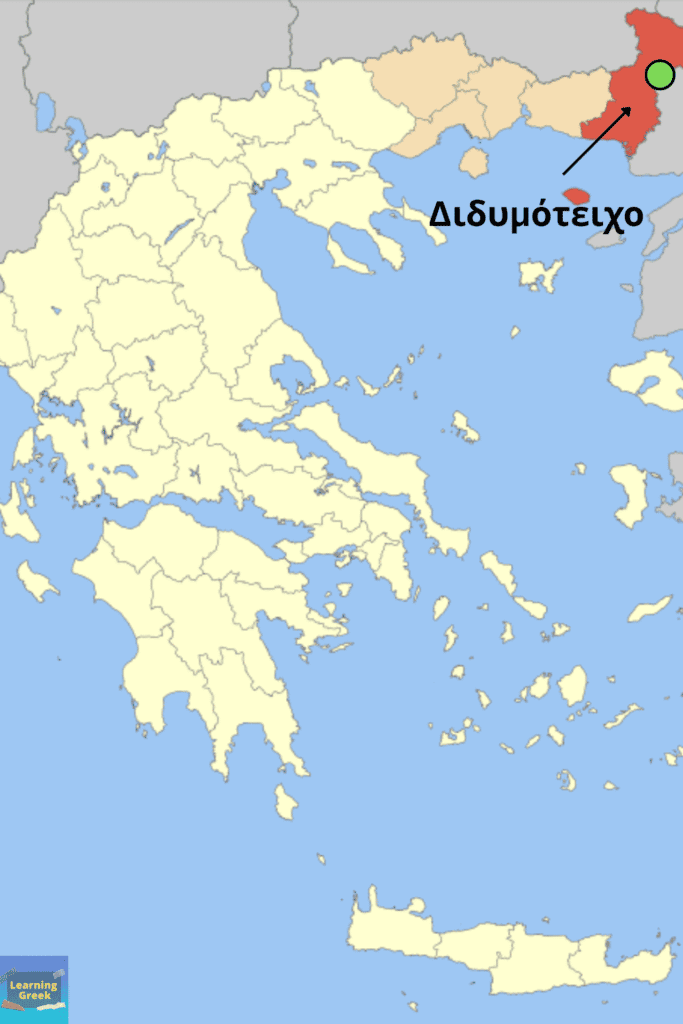
Didymoteicho is an area in the most northern part of Greece, well known for its military camps. A lot of Greek men have served there, and for many, it is a dreaded transfer because you are right on the borders. This means you are kilometers away from home and your life. Nonetheless, Didymoteicho belongs to a lesser-known, wild yet beautiful part of Greece.
I’ve been to Didymoteicho, Orestiada, Soufli, and Alexandroupoli. all the main parts of Evros. Although the scenery was different, it was magical in its own way. For an Athenian like me, it was a revelation. Moreover, the people were pure and authentic, which is why we pay great respect to Greeks living on the borders.
Naturally, I know that these areas are not on tourist maps. But, you will discover a different and beautiful side of Greece if you decide to travel there.
Exploring the Lyrics Further
Το 76 λίγο πριν να φέξει
πήρα ένα πλοίο άσπρο σαν ψυγείο
σαν νοσοκομείο
Το 76 σαν χοντρό αστείο
κρύο χειρουργείο το εθνικό θηρίο
μ’ έστειλε στη Χίο
Now, the first verses of the song make more sense. Why does the ship feel like a cold hospital, and why does everything feel like a bad joke? This is because it’s not an ordinary ship; it’s the one taking him to the military base.
Ultimately, the whole song is a narration of how he spent his time in the military and the hard time he had there. To truly understand this feeling, you need to have Didymoteicho Blues explained from a soldier’s point of view.
Why This Song Helps You Learn Greek
Picking a song with so many lyrics was a bold move. However, learning a language doesn’t have to be stiff. By getting to know the culture of Greece, you will find it much easier to learn the language as well.
For instance, Greek men talk a lot about their time in the military. So, the next time you hear this dialogue, you will know exactly what they mean:
– Πού υπηρέτησες; (Pu ipirétises?) – Where did you serve?
– Στην πινέζα. (Stin pinéza.) – At the thumbtack.
This makes sense because if you look at Didymoteicho on the map, it is right on the border. As a result, locals and soldiers call it πινέζα. With Didymoteicho Blues explained, you can easily pick up cultural slang like this that you won’t find in textbooks.
Greek Army Slang to Know
To help you blend in with real Greek conversations, here are the most common military slang words used by locals:
ο φαντάρος (o fandáros) – The soldier / recruit
η σκοπιά (i skopiá) – Guard duty
η καλλιόπη (i kalliópi) – The military toilet / toilet cleaning duty (named after the ancient Muse of epic poetry following a funny 1930s Athens design mishap!)
το καψόνι (to kapsóni) – Hazing / military pranks or punishments
ο παλιός (o paliós) – The old soldier (someone with senior status)
ο νέος / το ψάρι (o néos / to psári) – The new recruit / “the fish”
λελέ (lelé) – “Freedom right here, right now!” (Shouted when a soldier has very few days left).
Conclusion
Written in 1991, this song is still relatable today. Because the army is a big part of our culture, we still adore this song even though women don’t serve. After all, we have relatives, fathers, brothers, and boyfriends who have served. We hear them talking about their military adventures all the time, so we can feel and understand their struggle. In conclusion, just ask a Greek mother how she feels when it’s time for her boy to serve, and you will understand the universal appeal of the song.
In conclusion, reading Didymoteicho Blues explained reveals why it has such a universal appeal. Just ask a Greek mother how she feels when it’s time for her boy to serve, and you will understand the universal connection to this track.
If you want more Greek songs to explore, check out my Greek Music section! You will find plenty of song breakdowns, hidden cultural meanings, and everyday vocabulary to help you practice your Greek while listening to great tunes.



I started my ‘learn Greek’ back in 1980s. Dalaras was a name that came as a great singer. For me it was that his dictionary was clear and I could learn the beautifuk songs word perfect but nil understanding. The journey has continued and I wish, this tool had been available to help those of us who took the music to our hearts. Saw Dalaras recently in London and his voice still clear. Thanks for this article.
Thank you so much for sharing your beautiful journey with Greek music! It is amazing to hear that you started learning back in the 1980s and that Yiorgos Dalaras was such a big part of your language path. You are so right. Ηis pronunciation and diction are incredibly clear, which makes his tracks perfect for anyone trying to learn Greek with songs, even if the deeper meanings take some time to unlock!
How lucky that you got to see him live in London recently! It is incredible how his voice remains so powerful and clear after all these years.
Comments like yours are exactly why I love running this blog. Knowing that these breakdowns help bridge the gap between loving the music and truly understanding the lyrics means the world to me. Thank you for being a part of our community!