
Hello, my lovely Greek language learners!
Today, we’re diving into the delicious world of το φρούτο (to frúto) – the fruit and τα φρούτα (ta frúta) – the fruits!
Learning the names of fruits is both a fun and practical way to enrich your Greek vocabulary. Whether you’re visiting a market, cooking at home, or ordering in a café, fruits are everywhere in daily life.
This guide will familiarize you with some of the most popular summer and winter fruits in Greek, making it easier for you to explore fruit stalls and enjoy delicious fruits!
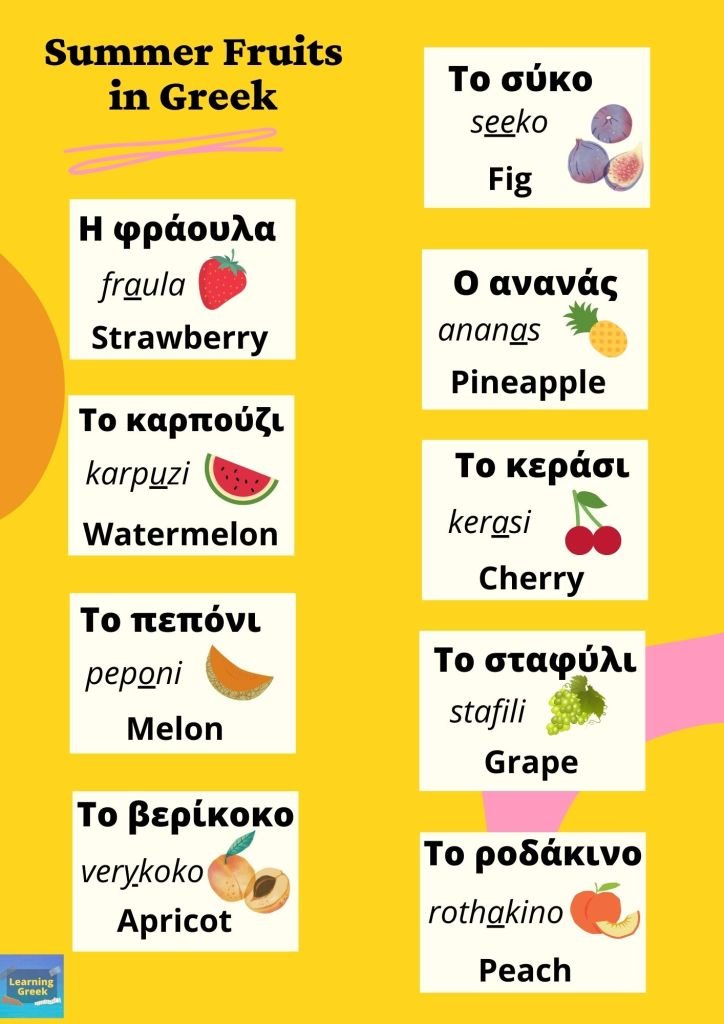
Summer Fruits in Greek
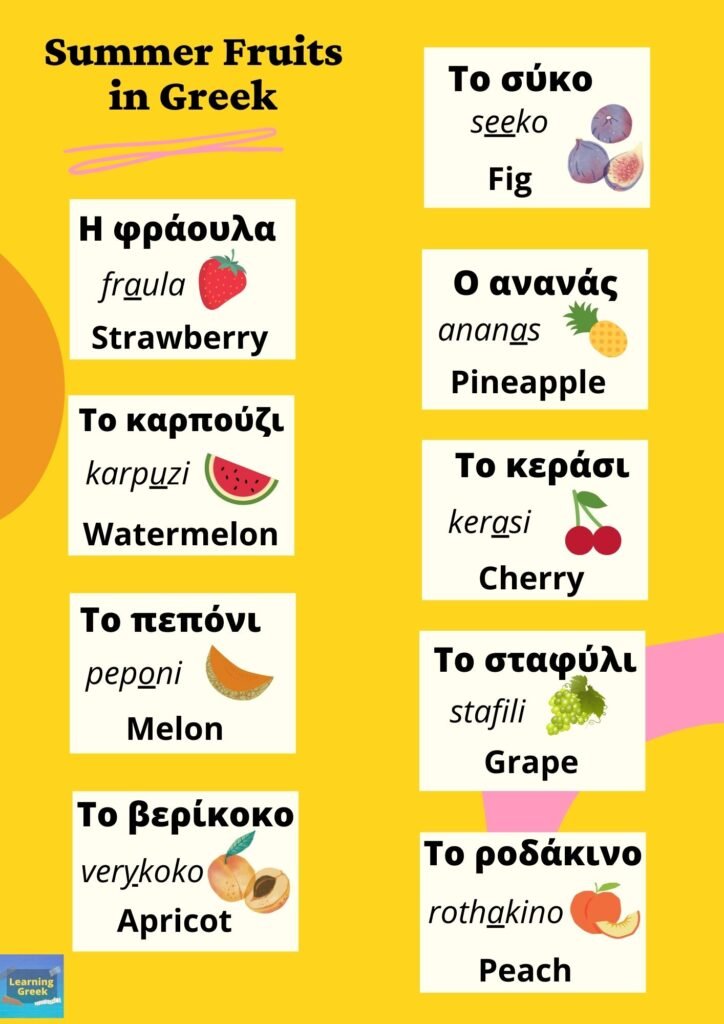
Summer in Greece is all about enjoying fresh, juicy fruits under the warm sun. Below is an image showcasing some of the most common summer fruits in Greek.
Let’s explore them!
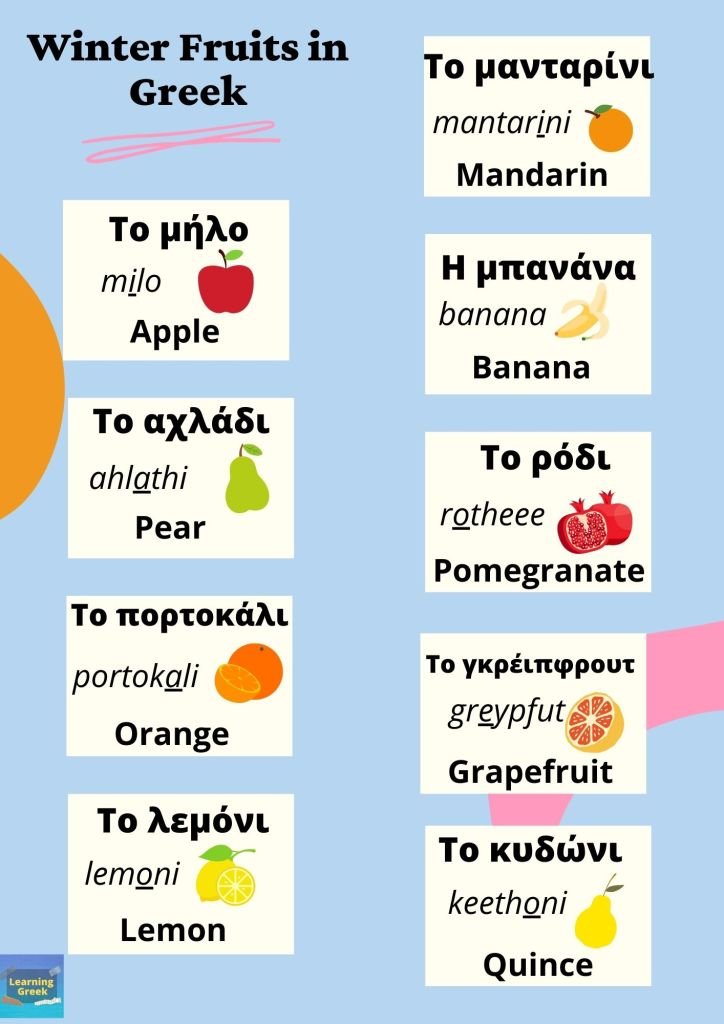
Winter Fruits in Greek
While summer brings an abundance of fresh fruits, winter in Greece also offers a variety of delicious and nutritious options. Below is an image showcasing some common winter fruits in Greek.
Let’s take a look at them!
Fruits in Everyday Context
At the Market
When visiting a Greek market (λαϊκή αγορά (laikí agorá), knowing the names of fruits will help you communicate with the sellers. Here are some phrases you might use:
- Πόσο κάνουν τα ροδάκινα;
(Póso kánun ta rothákina?)
How much are the peaches? - Θέλω ένα κιλό κεράσια, παρακαλώ.
(Thélo éna kiló kerásia, parakaló.)
I want one kilo of cherries, please. - Μπορείτε να μου δώσετε δύο μήλα;
(Boríte na mu dósete dίo míla?)
Can you give me two apples?
In the Kitchen
Once you’ve bought your fruits, you can use them in various recipes. Here are some useful phrases:
- Κόψε το καρπούζι σε φέτες.
(Kópse to karpúzi se fétes.)
Slice the watermelon. - Πλύνε καλά τις φράουλες πριν τις φας.
(Plíne kalá tis fráoules prin tis fas.)
Wash the strawberries well before you eat them.
In a Restaurant
When ordering fruits or fruit-based desserts at a restaurant, knowing the names will be helpful:
- Έχετε σαλάτα με φρέσκα φρούτα;
(Éhete saláta me fréska frúta?)
Do you have a salad with fresh fruits? - Θα ήθελα ένα χυμό πορτοκάλι.
(Tha íthela éna chιmó portokáli.)
I would like an orange juice.
Practice Makes Perfect
Learning fruit names in Greek is a great way to expand your vocabulary. Here are a few tips to help you practice:
- Label fruits at home: Write the Greek name for each fruit and stick it on the fruit baskets or fridge.
- Watch Greek cooking shows: Listen out for fruit names and how they’re used in recipes or everyday conversations.
- Visit Greek markets: If you’re in Greece, use these new words while shopping to reinforce your learning.
Want to learn your veggies too? Check out
Vegetables in Greek: A Guide for Learners
— it’s a great way to expand your Greek food vocabulary!
To take your Greek food vocabulary even further,
see Greek Food Vocabulary You’ll Actually Use.
Conclusion
By learning the names of both summer and winter fruits in Greek, you’ll not only improve your vocabulary but also get a deeper understanding of the delicious and diverse Greek diet. Enjoy practicing and, most importantly, enjoy eating all those tasty fruits!
Happy learning!