
Greek idioms offer a glimpse into the rich cultural and historical layers of the language.
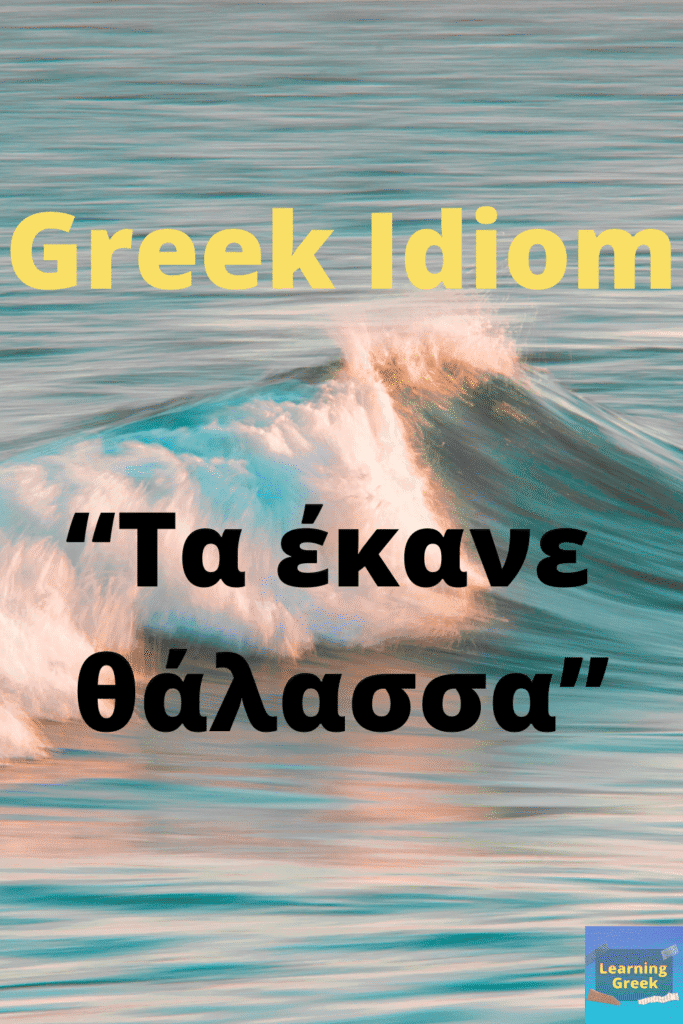
One particularly interesting idiom is Τα έκανε θάλασσα, which captures the Greek spirit of storytelling through language.
Let’s dive into its meaning, usage, and the historical significance behind this vivid phrase.
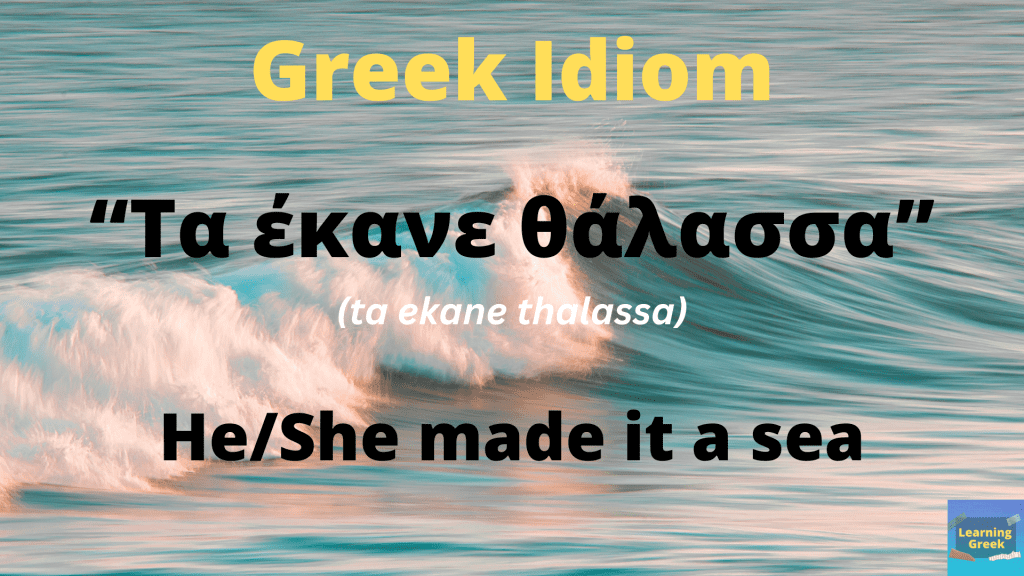
Τα Έκανε Θάλασσα
(Ta ékane thálassa)
- Literal Translation: He/She made it a sea.
- Meaning: This idiom refers to someone completely messing things up, causing confusion or chaos through a mistake or poor performance. The idea is that the situation has become as vast, uncontrollable, and messy as the sea.
Examples in Context
1. Workplace Context
Scenario: An employee is tasked with preparing an important report but submits it filled with errors.
- Ο Γιώργος τα έκανε θάλασσα με την αναφορά, και τώρα πρέπει να τη διορθώσουμε.
- O Yiórgos ta ékane thálassa me tin anaforá, ke tóra prépi na ti diorthósume.
- Yiorgos messed up the report, and now we have to fix it.
2. School Context
Scenario: A student doesn’t study for a crucial exam and answers all the questions incorrectly.
- Τα έκανε θάλασσα στο διαγώνισμα και δεν πέρασε.
- Ta ékane thálassa sto diagónisma ke den pérase.
- He messed up on the test and didn’t pass.
3. Sports Context
Scenario: A goalkeeper makes several mistakes, allowing easy goals during an important match.
- Ο τερματοφύλακας τα έκανε θάλασσα και χάσαμε τον αγώνα.
- O termatoféelakas ta ékane thálassa ke chásame ton agóna.
- The goalkeeper messed up, and we lost the game.
Similar Idioms in Other Languages
In English, idioms like to make a mess of things or to screw up carry similar meanings, but they lack the vivid imagery of the Greek version.
Making it a sea paints a far more chaotic picture, evoking something vast, uncontrolled, and turbulent—beyond just a simple mess-up.
Historical Development of the Idiom
The phrase Τα έκανε θάλασσα reflects how deeply connected the Greeks are to the sea.
As a maritime nation, Greece has always had a relationship with the unpredictable and expansive nature of the sea.
The sea—while beautiful and essential for trade and livelihood—can be chaotic, difficult to navigate, and even dangerous.
When someone “makes a sea” of something, it symbolizes turning a situation into something equally uncontrollable and confusing.
Though the exact origin of the idiom is unknown, its imagery is potent.
In ancient Greece, failed voyages, shipwrecks, or poorly handled situations on the water often had disastrous results.
Thus, comparing a mistake to “making it a sea” likely grew out of these kinds of associations, capturing the idea of a small mistake spiraling into a larger, uncontrollable issue.

The Story Behind the Idiom
One popular legend suggests that this idiom could be connected to an infamous event involving a failed naval expedition during the Byzantine Empire.
In this story, a general, who was in charge of organizing a fleet, overlooked key preparations, such as proper navigation tools and supplies.
As a result, the fleet was scattered at sea, some ships sinking, others lost.
The general, upon realizing the extent of his mistake, remarked, Τα έκανα θάλασσα — acknowledging how his actions had turned everything into a chaotic sea.
While there isn’t direct historical evidence linking this specific event to the idiom, the sentiment of chaos caused by negligence fits perfectly within the phrase’s meaning.
Conclusion
Understanding idioms like Τα έκανε θάλασσα gives more than just a linguistic lesson—it offers insight into how Greek culture and history shape language.
The phrase reminds us that even small errors, when left unchecked, can spiral into larger, uncontrollable situations—much like the sea itself.
The next time you hear this idiom, you’ll know it signifies more than just a mistake; it’s a situation turned into a sea of confusion and chaos.