
Hello my dear festive learners!
With Orthodox Easter just around the corner, April 12 is the magic day this year. So, I thought this is the perfect timing to talk about the infamous Greek Easter traditions and, at the same time, give you a feel for how Greeks celebrate, because it is truly something unique.
Yes, we love Christmas, but Easter holds a special place in our hearts and is, in fact, the real king of our celebrations throughout the year.
So,if you want to feel like a local and understand what happens during this sacred week, then stay with me, and I will explain everything!
Because Greek Easter is not just a celebration, it’s a journey. Experiencing the Greek Easter Traditions lets you see why this holiday is so meaningful.
Greek Easter Traditions: Understanding Holy Week
In Greece, the week before Easter is called Μεγάλη Εβδομάδα (megáli evdomáda).
This doesn’t simply mean “Big Week.” It means Great and Holy Week.
It’s a time of reflection, silence, and deep emotion, while for a few days the joy of spring pauses and the entire country follows the path of Christ toward the Cross.
If you visit Greece during this time, you’ll hear church bells ringing slowly… and you will also feel a quiet sense of mourning in the air.
Easter or Πάσχα (Páscha) is not just a holiday, it becomes something deeply personal and spiritual for most Greeks.
Fasting and Reflection: Part of Greek Easter Traditions
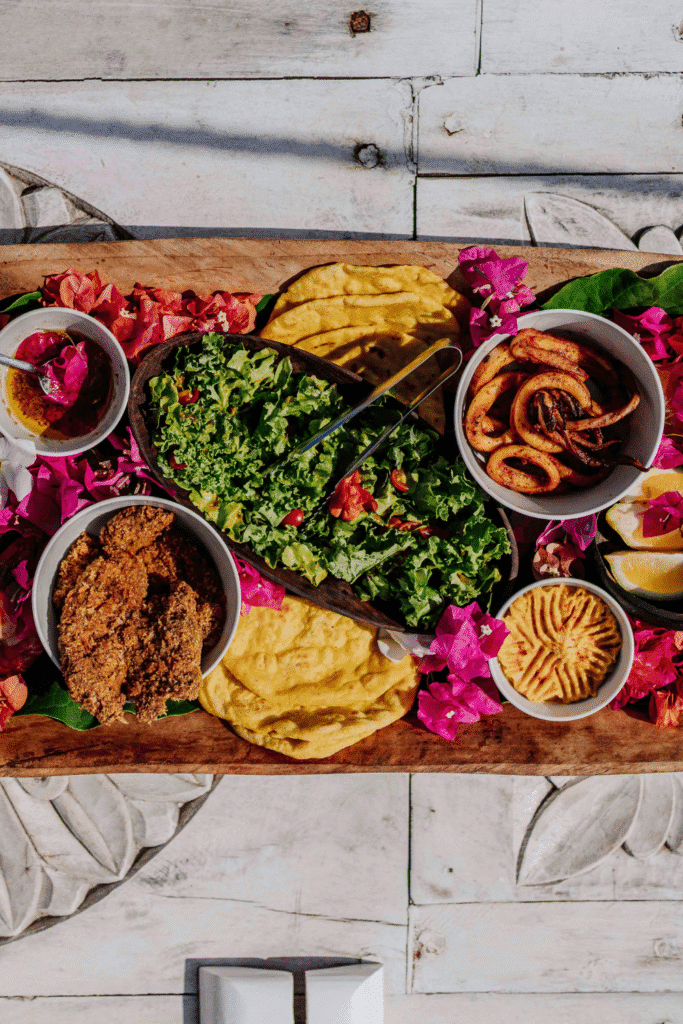
With the start of Holy Week, the fasting becomes even stricter. The 40-day fast that began on Clean Monday has ended, and now Greeks enter the Holy Week fast.
During this week there is no meat, no dairy, and no eggs, so the fast becomes very strict.
Many people avoid olive oil throughout the entire week
The idea is simple: you “clean” the body and the soul so that you stay focused on the meaning of the week, and as a result the whole experience becomes more meaningful.
Traveler tip:
If you are vegan, look for the word νηστίσιμο (nistísimo) – fasting-friendly on menus. Greek cuisine has a wide variety of dishes, from γεμιστά (yemistá) – stuffed vegetables, μελιτζάνες (melitzánes) – baked eggplant, φασολάδα (fasoládha) – bean soup, to χόρτα (chórta) –wild greens, so you can still enjoy authentic flavors even during Holy Week.
A Journey Through Greek Easter Traditions During Holy Week
Μεγάλη Δευτέρα – Megáli Deftéra
Holy Monday
A Quiet Beginning
Holy Week begins on a calm and reflective note, and the atmosphere feels serious as the focus turns inward.
Culture & Tradition:
This day sets the tone for the week, and as a result, families reflect quietly, feeling a sense of anticipation for the sacred events ahead.. It’s a day of inward focus, preparing hearts for the journey toward Easter.
In the Church:
The atmosphere is serious, and the focus turns inward. In the evening, churches hold the Υποδοχή του Νυμφίου (Ypodochí tou Nymphíou )– Bridegroom Service, reminding everyone to stay spiritually awake and prepared.
Μεγάλη Τρίτη – Megáli Tríti
Holy Tuesday
A Call to Be Ready
The mood remains solemn, and the hymns of this day are also among the most beautiful.
Culture & Tradition:
Families honor this theme with quiet reflection, prayer, and discussion, preparing themselves emotionally for the events of the week.
In the Church:
Holy Tuesday is dedicated to the Παραβολή των Δέκα Παρθένων (Paravolí ton Déka Parthénon) –Parable of the Ten Virgins, symbolizing faith and preparedness.
The τροπάριο ( tropário) – troparion for this day was written by Monk Kassiani (Κασσιανή), a poet, hymnographer, and composer of the Church.
Church icons remain covered in dark cloth, thereby reinforcing the feeling of mourning, while the hymns focus on the idea of readiness, urging everyone to stay spiritually aware and not “asleep.”
Μεγάλη Τετάρτη – Megáli Tetárti
Holy Wednesday
Healing and Forgiveness
This is a deeply meaningful day.
Culture & Tradition:
Holy Wednesday emphasizes repentance and forgiveness, and therefore marks an important emotional turning point. As a result, homes remain quiet, and the community pauses, reflecting on love, healing, and preparation for the coming sorrow of Good Friday.
In the Church:
In the afternoon or evening, many people attend the service of το Ευχέλαιο (to Efchélaio) – Holy Unction, where the priest anoints the faithful with holy oil for healing—both physical and spiritual.
At the same time, the day focuses on repentance and forgiveness, marking an important emotional turning point in Holy Week.
Μεγάλη Πέμπτη – Megáli Pémpti
Holy Thursday
The Last Supper and the 12 Gospels
Holy Thursday marks the beginning of the most significant events of Holy Week.
In the Church:
In the evening, churches hold the Ανάγνωση των Δώδεκα Ευαγγελίων (Anágnosi ton Dódeka Evangelíon) – Reading of the 12 Gospels,while the atmosphere becomes deeply emotional, recounting the story of Christ’s arrest and suffering. The priest places a large cross in the center of the church, and the congregation observes a moment of deep silence.
At the same time in the Kitchen:
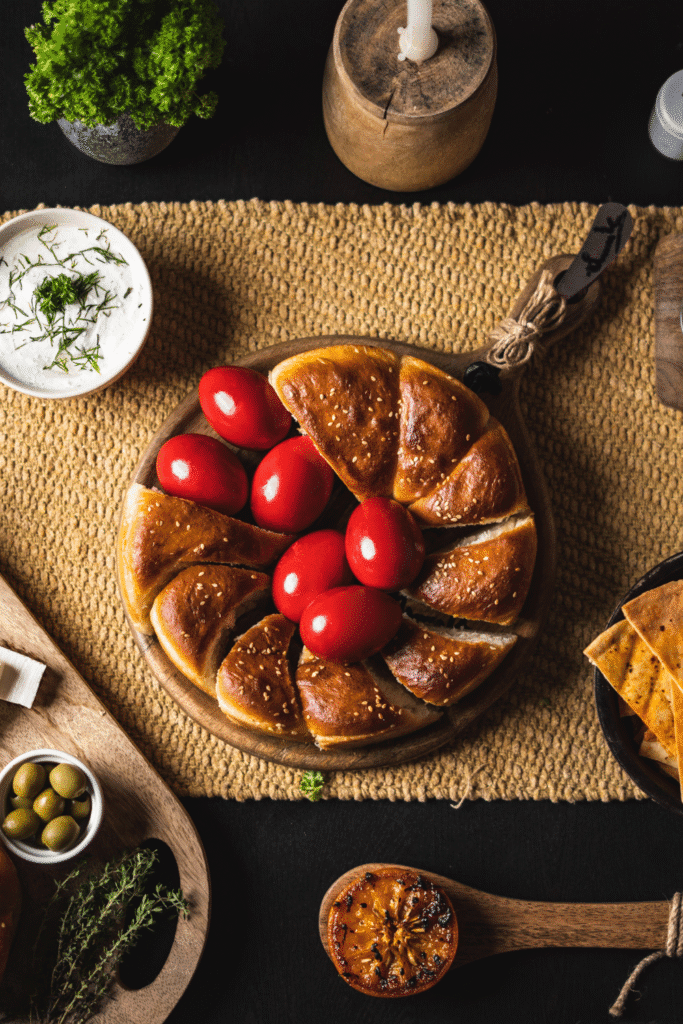
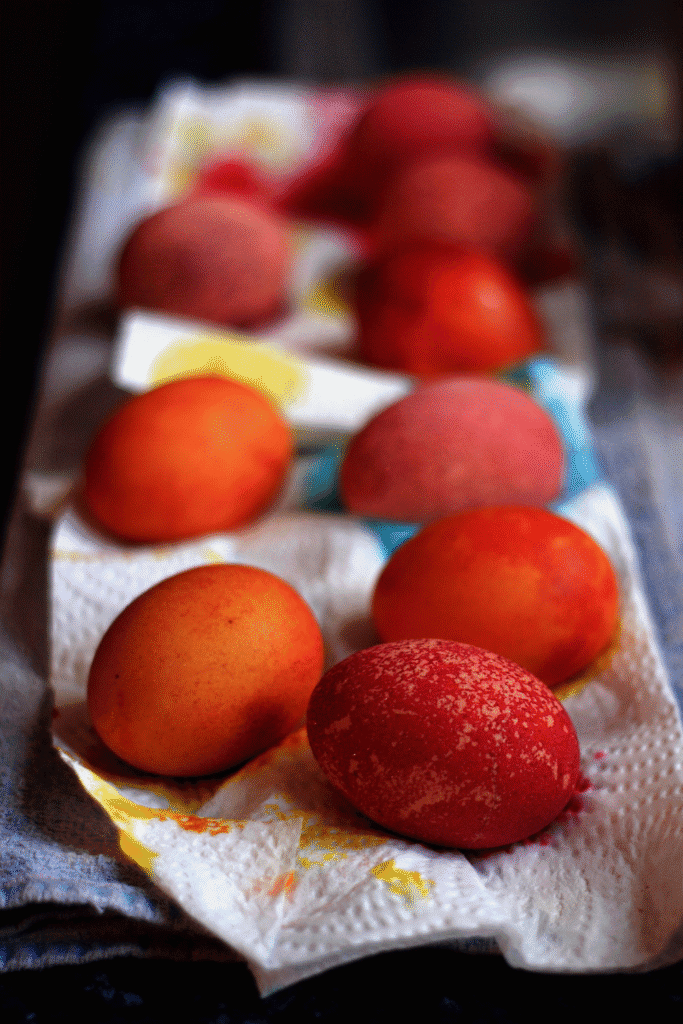
This is the first day families begin Easter preparations, as they bake τσουρέκι (tsouréki) – sweet braided bread and dye the κόκκινα αυγά (kókkina avgá) – red eggs, symbolizing the blood of Christ and the victory of life.
Tsoureki is a soft, aromatic bread made with spices like mahlepi and mastic. Often, a red egg is placed in the braid before baking.
Μεγάλη Παρασκευή – Megáli Paraskeví
Holy Friday
The Saddest Day
This is the most emotional day of the year.
There are no celebrations, and instead there is no loud activity, while even meals stay minimal.
The morning:
Christ is taken down from the Cross and placed in the Επιτάφιος (Epitáfios) – Flowered Bier, a wooden structure decorated with thousands of fresh flowers.
The evening:
One of my favorite Greek Easter traditions is the Επιτάφιος procession.
Επιτάφιος procession takes place. Hundreds of people walk slowly through the streets, holding candles, while, church bells ring in a mournful rhythm.
It’s quiet and peaceful, while at the same time incredibly moving.
Μεγάλο Σάββατο – Megálo Sávvato
Holy Saturday
Waiting for the Light
Saturday is a day of silence and anticipation.
The Morning:
A small “First Resurrection” service takes place, and during it the priest throws bay leaves and rose petals—a quiet hint that something is about to change.
Midnight:
Everything goes dark, and then, suddenly, the priest brings out the Άγιο Φως (to ágio fos) – Holy Light and one candle lights another… and another… until the whole church glows. This moment is at the very heart of Greek Easter Traditions, combining faith, family, and light.
At the same time, little children hold λαμπάδες (lambádes) – Easter candles, often colorful and decorated with different themes. These candles are usually a special gift from their godparents, which makes the moment even more meaningful for them.
Immediately after, everyone says:
- Χριστός Ανέστη (Christós Anésti) – Christ is Risen
- Αληθώς Ανέστη (Alithós Anésti) – Truly He is Risen
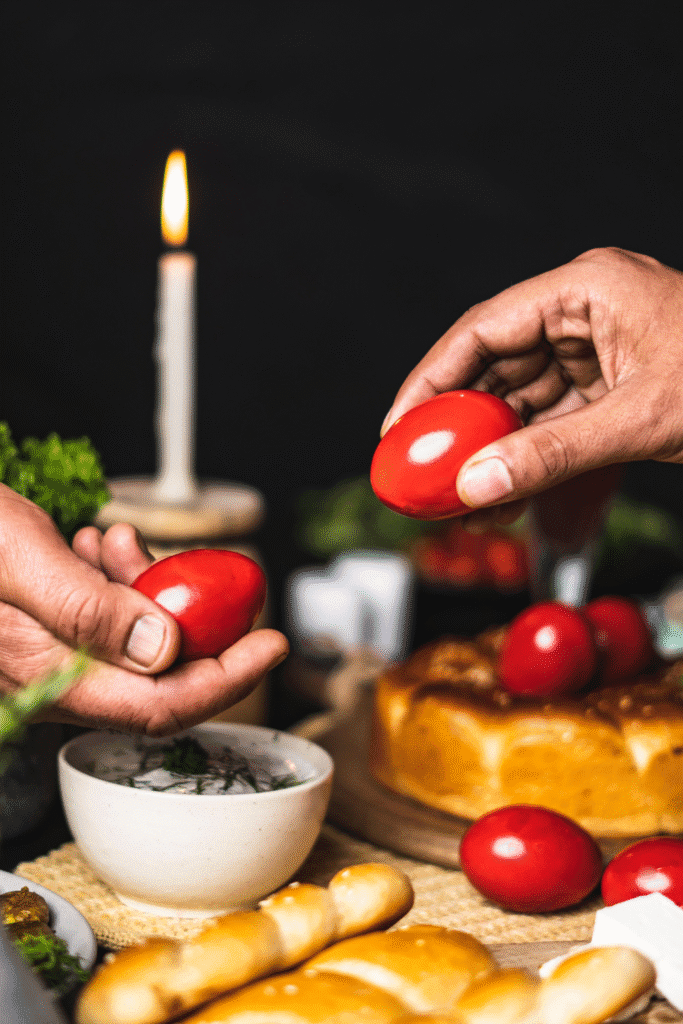
Right after, in many churches, people bring their κόκκινα αυγά (kókkina avgá)– red eggs and play τσουγκρίσματα (tsougkrísmata) – egg tapping right after saying the greeting. Some churches also hand out red eggs after the service, which often ends around 2:00 AM.
The Meal:
Then, when people return home, they eat μαγειρίτσα (mayirítsa) – traditional Easter soup, which gently breaks the fast.
Κυριακή του Πάσχα – Kiriakí tou Páscha
Easter Sunday
The Great Feast
Now everything changes, and suddenly the entire atmosphere shifts.
After the long week of fasting and silence, Sunday is pure celebration as families gather, music plays, and food is everywhere. This gathering is one of the oldest Greek Easter Traditions, passed down for generations.
The Star of the Day:
αρνί (arní )– lamb, slow-roasted on a spit for hours, is the centerpiece of the feast.
In fact, when it’s cooked on a spit, it’s known as οβελίας (ovelías) – spit-roasted lamb, because it is prepared on a σούβλα (soúvla) – spit.
Of course, depending on the region and local traditions, lamb can also be cooked in the oven or even stuffed with rice and herbs.
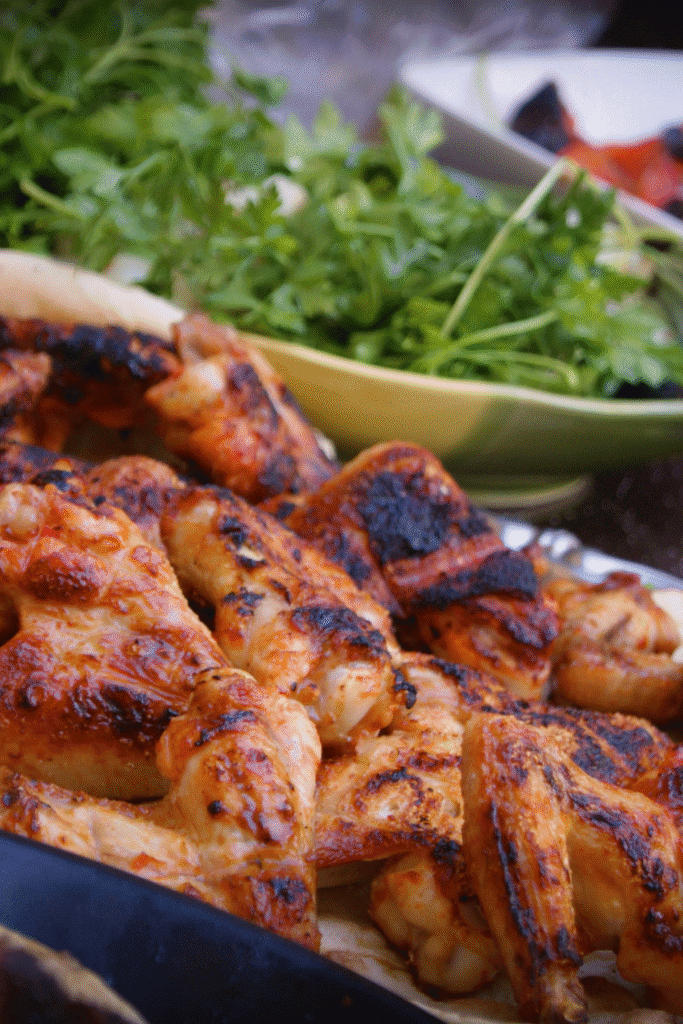
While lamb is the star, it’s definitely not the only thing on the table. Greeks also prepare dishes like κοκορέτσι (kokorétsi)– seasoned offal wrapped in intestines, κοντοσούβλι (kontosoúvli)– large skewered pork, and many other meat specialties that vary from region to region.
This variety is exactly what makes the celebration feel so rich and alive, and as a result the table always feels generous and festive.
The Game:
Tσούγκρισμα (tsoúgrisma) – red egg cracking game.
You tap your egg against someone else’s, and the last unbroken egg brings luck for the year.
In the Church:
Many churches hold a Ακολουθία της Αγάπης (Akolouthía tis Agápis)– Service of Love in the evening. This beautiful service celebrates the love and unity of the Resurrection, bringing communities together in song and prayer.
Δευτέρα του Πάσχα – Deftéra tou Páscha
Easter Monday
A Day to Relax and Celebrate
Easter Monday is a quieter day, while it’s perfect for lingering with family and friends. Many Greeks head outdoors for picnics, barbecues, or trips to the countryside, continuing the joy of Easter Sunday in a more relaxed way.
In the end, it’s a day to enjoy leftovers, play games, and soak up the festive atmosphere,while life returns to normal.
Why Orthodox and Catholic Easter Sometimes Fall on Different Days
You may notice that Greek Orthodox Easter often doesn’t match the date of Catholic or Protestant Easter.
Here’s why:
- The Orthodox Church follows the Julian calendar for calculating Easter, while most Western churches use the Gregorian calendar.
- Easter is always celebrated after Passover, and the two calendars sometimes calculate the timing differently.
- The result: Orthodox Easter can be one, four, or even five weeks later than Western Easter, though occasionally they fall on the same day.
So if you’re traveling to Greece or celebrating with Greek friends, don’t be surprised if your Easter egg hunts and feasts happen on a different weekend!
Easter Greetings: Part of Greek Easter Traditions
During Greek Easter, people use a few different greetings depending on the day and context.
Before the Resurrection (Holy Week):
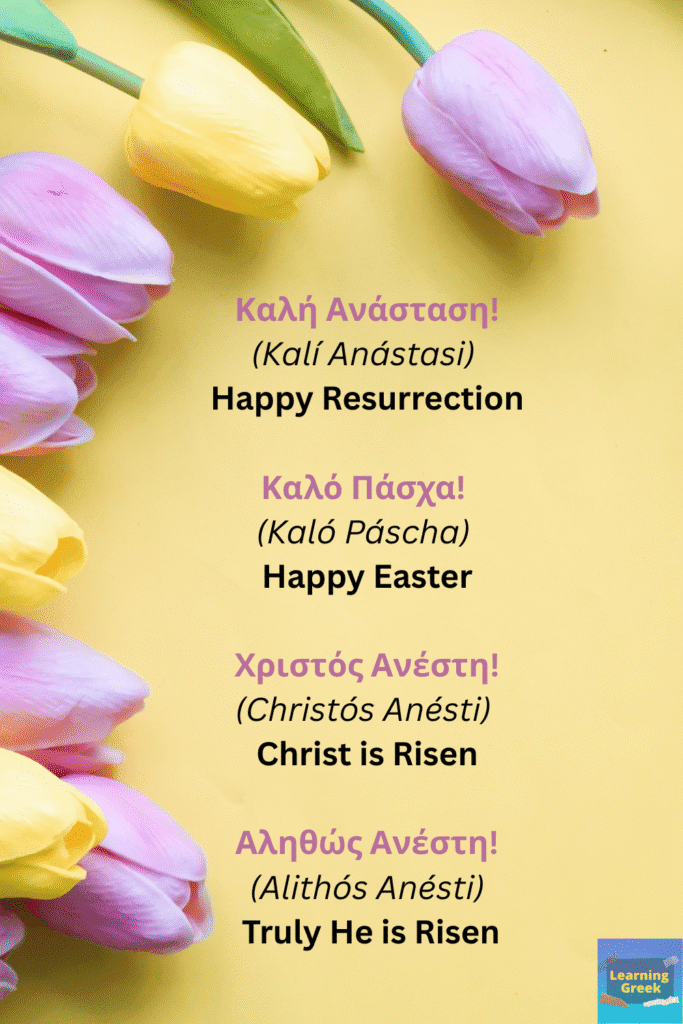
- You’ll hear Καλή Ανάσταση (Kalí Anástasi) — “Good Resurrection” — especially from Holy Thursday through Holy Saturday afternoon.
- Καλό Πάσχα (Kaló Páscha) — “Happy Easter” — is also used during this period as a general wish for the holiday.
After the Resurrection (Starting Midnight Saturday):
The most important greeting of Greek Easter begins at midnight on Holy Saturday and continues well beyond:
- Χριστός Ανέστη (Christós Anésti) – Christ is Risen
- Response: Αληθώς Ανέστη (Alithós Anésti) – Truly He is Risen
You’ll hear these everywhere, in church, on the streets, at family tables, and in shops, so they quickly become part of everyday life.
How long do Greeks say Χριστός Ανέστη?
Traditionally, the greeting Χριστός Ανέστη is used for about 40 days after Easter, up to the feast of the Ascension (Ανάληψη – Analípsi), which is 40 days after Easter Sunday.
So don’t be surprised if someone greets you with Χριστός Ανέστη even weeks after Easter — it’s normal and part of the Greek tradition.
Important Greek Easter Vocabulary
Want to follow along like a local? Start with these words:
- το Πάσχα (to páscha) – Easter
- το Άγιο Φως (to ágio fos) – Holy Light
- η Μεγάλη Εβδομάδα (i megáli evdomáda) – Holy Week
- η νηστεία (i nisteía) – fasting
- το νηστίσιμο (to nistísimo) – fasting-friendly (food)
- ο Επιτάφιος (o epitáfios) – the flower-covered bier of Christ
- η Ανάσταση (i anástasi) – Resurrection
- το αρνί (to arní) – lamb
- το τσουρέκι (to tsouréki) – sweet Easter bread
- η μαγειρίτσα (i mageirítsa) – traditional Easter soup
- το αβγό (to av̱gó) – egg
- το τσούγκρισμα (to tsoúgrisma) – egg-cracking game
- η λαμπάδα (lambádα) – Easter candles
A Final Note on Greek Easter Traditions
Greek Easter is a journey of faith, family, and tradition, and in the end it brings everything together. From Holy Week to Easter Sunday, every moment is full of meaning, song, and celebration.
Say Χριστός Ανέστη, crack a red egg, and then enjoy the flavors and customs that make it truly special.
Καλή Ανάσταση!