

Hello my beautiful people!
Ready to sound like a local? Mastering the most essential Greek greetings and polite expressions is the best way to start your journey, whether you’re planning a trip to Greece or just want to impress your Greek friends.
In this guide, we’re going to look at how to say hello, goodbye, and thank you so you can feel confident in any situation!
1. Greek Greetings for Every Occasion
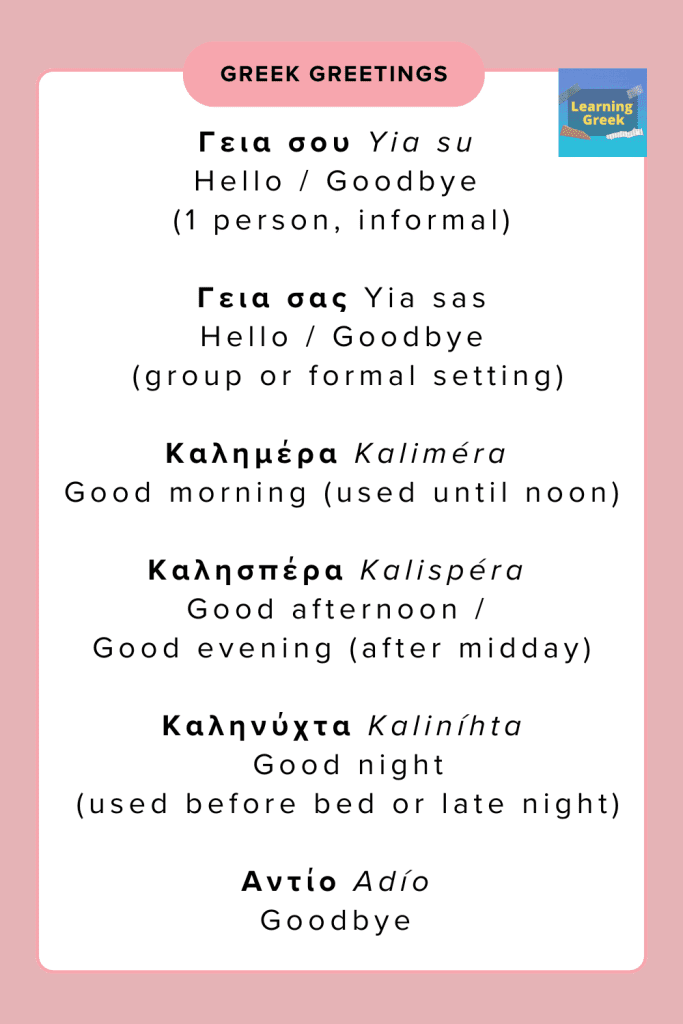
One of the first words you’ll learn in Greek is Γεια (Yia), a versatile greeting that can mean both “Hi” and “Bye.” It’s informal, but can be adjusted depending on the formality of the situation:
- Γεια σου (Yia su) – “Hello” or “Goodbye” (for one person, informal).
- Γεια σας (Yia sas) – “Hello” or “Goodbye” (for more than one person or in formal situations).
To be more specific about the time of day, Greek has dedicated greetings:
- Καλημέρα (Kalimera) – “Good morning” (used until noon).
- Καλησπέρα (Kalispera) – “Good afternoon” or “Good evening” (used after midday).
- Καληνύχτα (Kaliníhta) – “Good night” (used before bed or when saying goodbye late in the evening).
If you want to say goodbye more formally, Αντίο (Adío) is the way to go, although Greeks often use Γεια σας casually in parting.
2. Expressing Gratitude and Politeness
Politeness is a cornerstone of Greek culture, and knowing how to express gratitude or request things politely will earn you favor in most interactions:
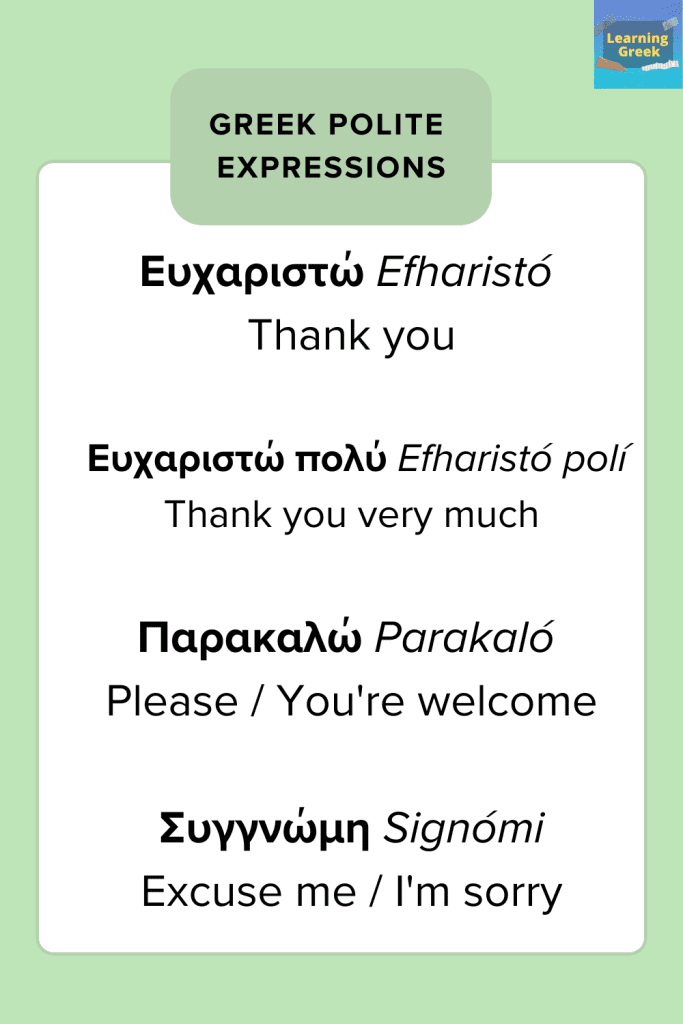
- Ευχαριστώ (Efharistó) – “Thank you.”
- Ευχαριστώ πολύ (Efharistó polí) – “Thank you very much” (for expressing deeper gratitude).
When you’re asking for something, or just being polite in general, the word to know is Παρακαλώ (Parakaló). It serves dual purposes:
- Παρακαλώ (Parakaló) – “Please” (when requesting something).
- Παρακαλώ (Parakaló) – “You’re welcome” (as a response to “Thank you”).
If you need to excuse yourself or apologize, the word Συγγνώμη (Signómi) is essential, covering both “I’m sorry” and “Excuse me” depending on the context.
3. Cultural Context of Greek Greetings
When interacting with Greeks, you’ll notice a clear distinction between casual and formal language. In more formal settings, it’s polite to use Γεια σας instead of Γεια σου, and to greet with Καλημέρα or Καλησπέρα, especially when meeting someone for the first time. Adding polite phrases like Παρακαλώ and Ευχαριστώ frequently in your conversations will show respect and can lead to warmer responses.
Moreover, Greek people appreciate direct eye contact during greetings and farewells, as well as a friendly tone. Even small phrases like Συγγνώμη or Παρακαλώ are appreciated and help maintain good rapport.
By mastering these greetings and polite expressions, you’ll feel more confident navigating daily interactions in Greece.
Before You Go
Learning how to say hello is just the beginning! Don’t worry about being perfect! Greeks love it when you try to speak the language. Take it one word at a time, and you’ll be chatting in no time.
Once you feel comfortable with these Greek greetings, you’ll be ready to start describing the world around you! Check out these beginner-friendly guides to help you talk about colors, dates, and more with your Greek friends
Keep Learning Greek
Colors in Greek and how to properly use them – Now that you can say hello, learn how to describe the world around you!
Months in Greek plus useful vocabulary – Master the calendar and talk about dates like a native.
Days of the week in Greek – A perfect companion to your new greetings.



Y want speaking greek language