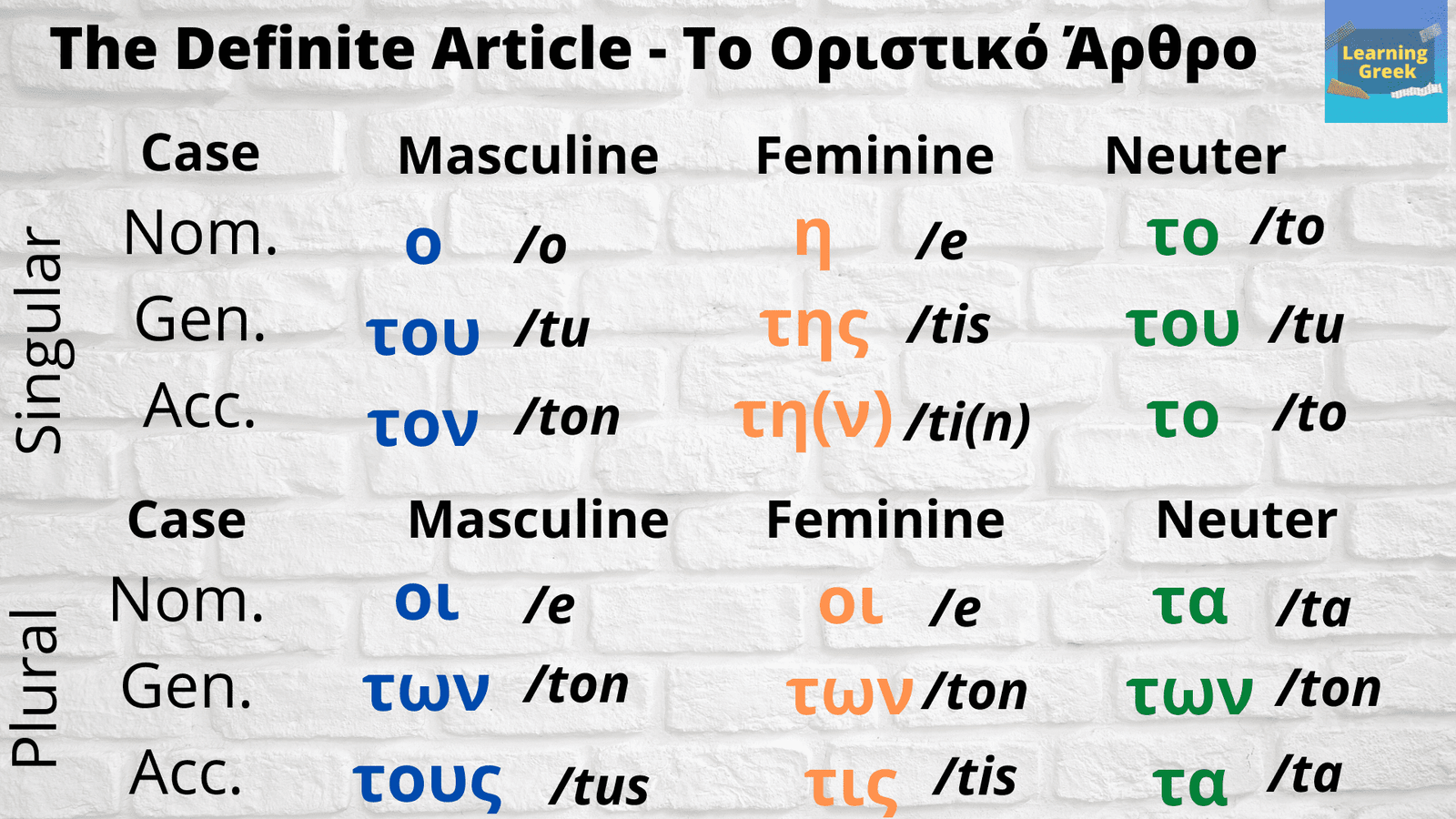

Hello my dear friend!
Until now, we’ve seen the Greek alphabet as well as the
two-letter vowels and consonants.
One would think that we have covered it all. But have we? Have we
really? We Greeks are crazy so the answer is definitely no! Yes…
I don’t know how to tell you but we still need to talk about the
famous “αυ” and “ευ” vowel combinations. They are begging me to
talk to you about them so I don’t haveany other choice, really…
I promise to keep it short and fun. At least I have somecool images
to show you that will make the process more enjoyable.
So, let’s get started!
The pronunciation of “αυ” and “ευ”
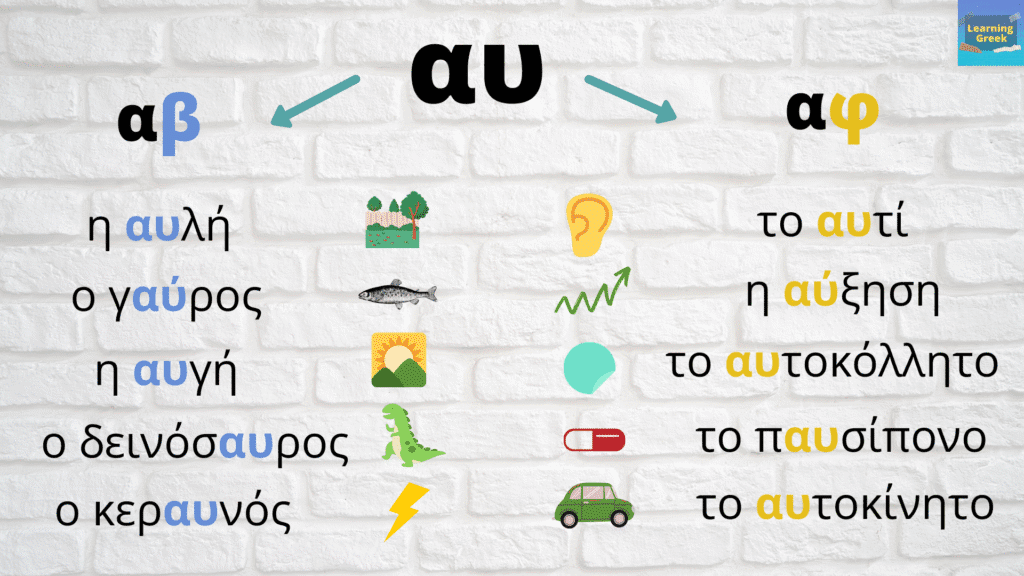
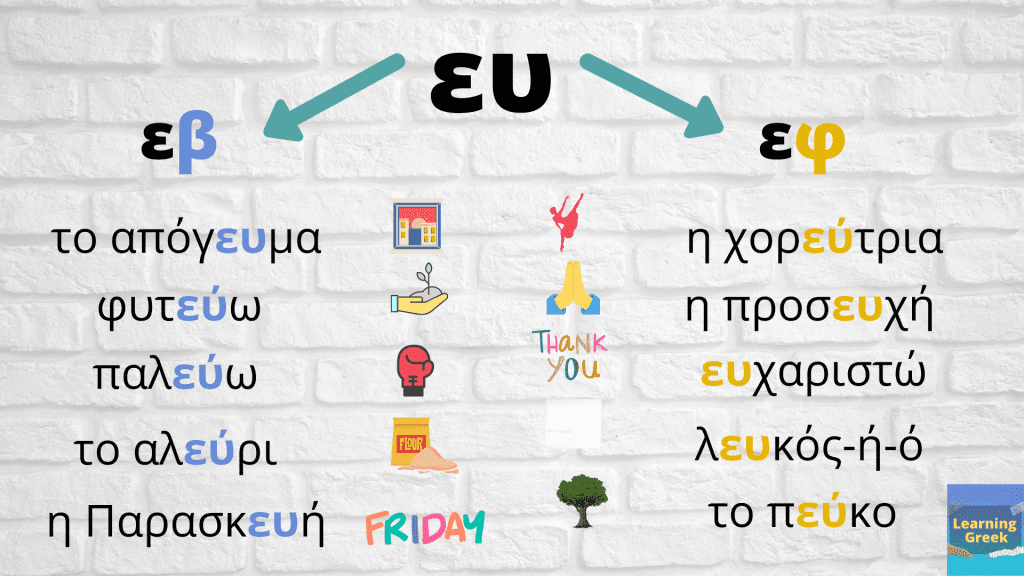
The vowel combinations of “αυ” and “ευ” have a double pronunciation.
means that in some words they pronounced as av (αβ) and ev (εβ)
and in some others as af (αφ) and ef (εφ). So how can we distinguish
how to pronounce them each time?
Let’s have a look at the rules.
The αυ and ευ are pronounced as av and ev when a vowel or a voiced consonant follows (β, γ, δ, ζ, λ, μ, ν, ρ)
They pronounced as af and ef when a voiceless consonant follows
(κ, π, τ, χ, φ, θ, σ, ξ, ψ).
This might seem a little hard to remember at the beginning but I promise
you, once you get a little more experienced with the Greek language,
the pronunciation will come to you automatically.
Now let’s expand our vocabulary with words that include those combinations.
Ευ – εβ and εφ (ev and ef)
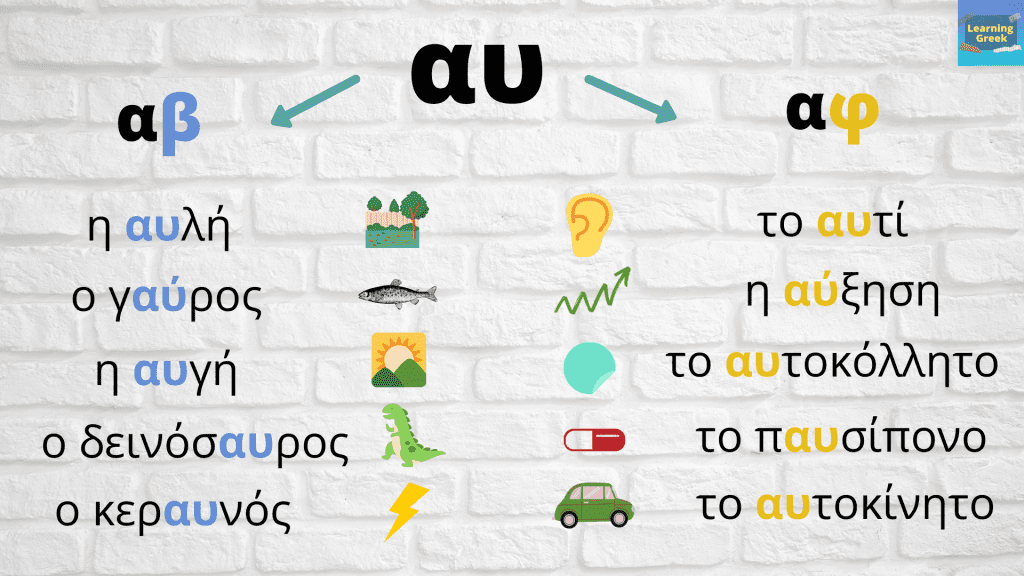
Αυ – αβ and αφ (av and af)
That was it! Goal succeeded! I kept it short and sweet as I had promised.
I’m not sure about the sweet part though… If you have any questions,
don’t hesitate toleave a comment and I will do my best to answer as
simply as possible.
It is sunny in Greece today and I hope you have a bright day as well!
Until the next lesson!