
Hello my Greek learners and cultural enthusiasts!
Today, Monday 23/2/2026 is Clean Monday in Greece and it is a big deal for Greeks.
Wait, are you telling me that Greeks are looking for another excuse to celebrate?
Απόκριες (Apokriés – Greek Carnival) just ended yesterday and they had Τσικνοπέμπτη (Tsiknopémpti) just a few days ago.
Yes and no.
Although we give a special meaning to this day by surrounding it with special traditions, Clean Monday symbolizes the beginning of the preparation for Easter.
And Easter is a big deal for Greeks and Orthodoxy.
The whole Christian world might consider Christmas the biggest holiday, but for Greeks Easter comes first and the days before it are very important.
But let’s take it step by step
What is Clean Monday?
First things first, since we’re an educational site after all.
Clean Monday is Καθαρά Δευτέρα (Kathará Deftéra) in Greek.
Clean means καθαρός (katharós) and it is an adjective so it also has this forms.
feminine → καθαρή (katharí), neuter → καθαρό (katharó).
You can also find it as Καθαρή Δευτέρα although the older Katharevousa form of the feminine adjective ending in -a has become the standard form.
So Καθαρά Δευτέρα is the official name of the day.
Καθαρά Δευτέρα is a movable feast. This means that it does not fall on the same date every year.
But Why Do We Call it Clean?
This is the most interesting and symbolic part of it.
Clean symbolizes the cleansing of the body and soul.
It’s the first day of the big fast which will last for 40 days and is known as Σαρακοστή (Sarakostí).
Don’t be surprised if you’re in Greece during this period and you hear people saying:
– Καλή Σαρακοστή! (Kalí Sarakostí) – Happy Lent!
It is the most common wish these days, even for some days before.
I was out shopping yesterday and clerks were already wishing me
Καλή Σαρακοστή.
You reply with the exact same phrase. Simple as that.
And although the word clean has a symbolic meaning connected with fasting, in some parts of Greece people also give it a literal meaning by cleaning refrigerators and cooking pots from the grease of meat and from foods you are not supposed to eat during the fasting.
They also clean their houses and sometimes paint their pavements white.
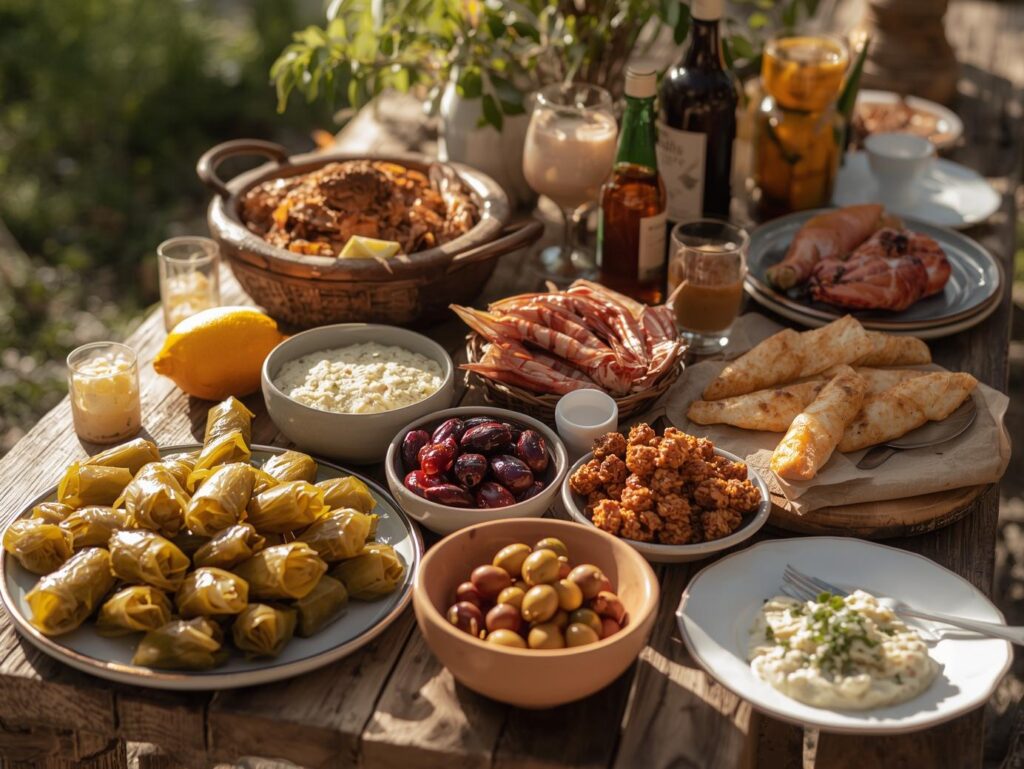
What Do We Eat on Clean Monday in Greece?
Meat lovers, don’t fret!
Yes, you are not supposed to eat meat or dairy products, but Greek cuisine is so rich that you will be surprised by the variety.
Let’s see some of the most typical dishes.
1. Λαγάνα (Lagána) – Lagana bread
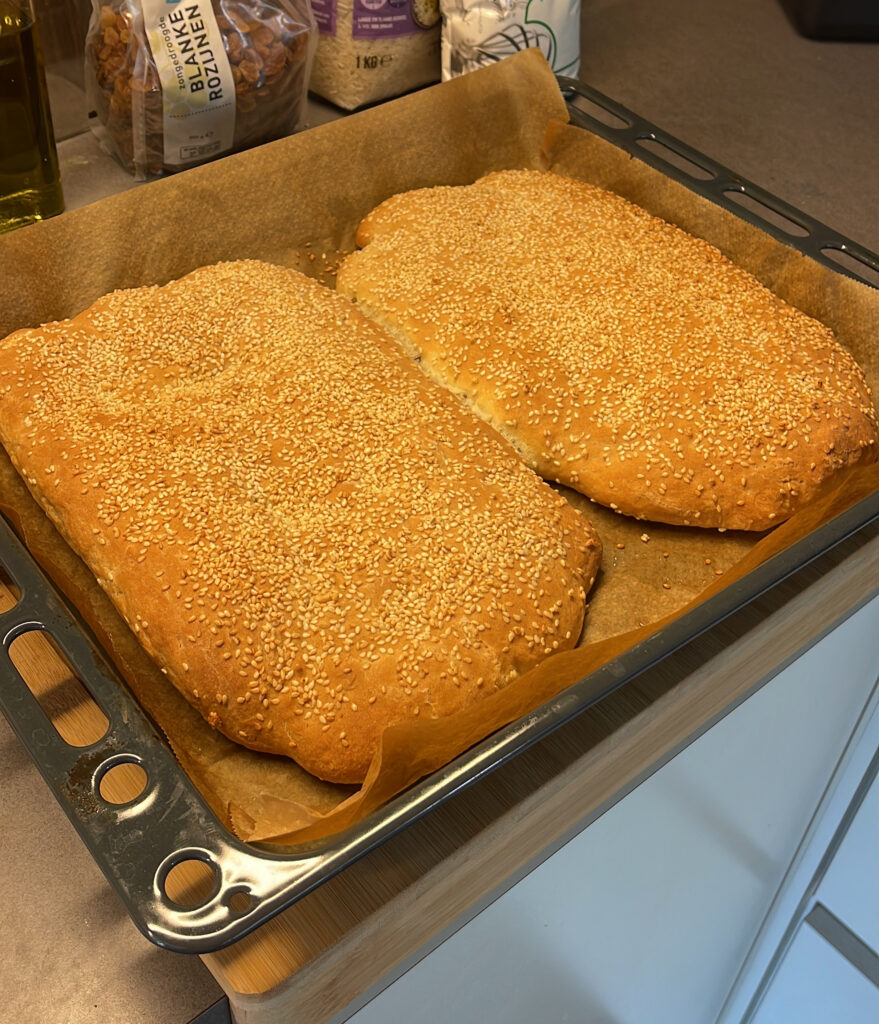
Λαγάνα is the queen of the Clean Monday table.
It is a type of flat unleavened bread traditionally eaten on this day.
Its history goes back to ancient Greece. The playwright Aristophanes mentions lagana in his works, and the Roman poet Horace described it as the bread of the poor.
You will usually find lagana only on this day, and sometimes you need to preorder it from bakeries.
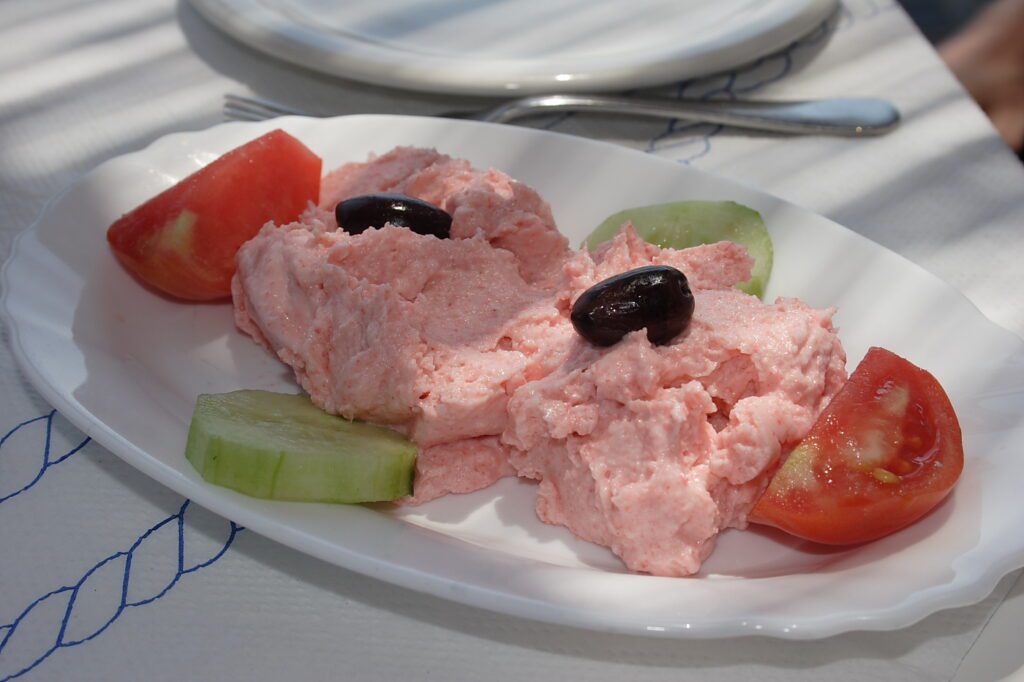
2. Ταραμοσαλάτα (Taramosaláta) – Fish roe dip
Ταραμοσαλάτα is is a delicious fish roe dip that accompanies lagana very well. I can eat only those two things on Clean Monday and be very happy.
And because I love it so much, I have a recipe for you to try it. It’s very easy to make and did I already say delicious?
Simple Taramosalata Recipe
Here is a simple traditional way to make taramosalata at home.
Ingredients
- 100 g ταραμάς (taramás)
- 2 slices bread
- juice of 1 lemon
- 80 ml olive oil
- a little water if needed
Steps
- Soak the bread in water and squeeze it well.
- Blend the taramas and the bread together.
- Add the lemon juice.
- Slowly add the olive oil while mixing.
- Add a little water until the mixture becomes smooth and creamy.
Serve with fresh λαγάνα (Lagána). Yummy!
3. Ντολμαδάκια (Dolmadákia) – Stuffed vine leaves
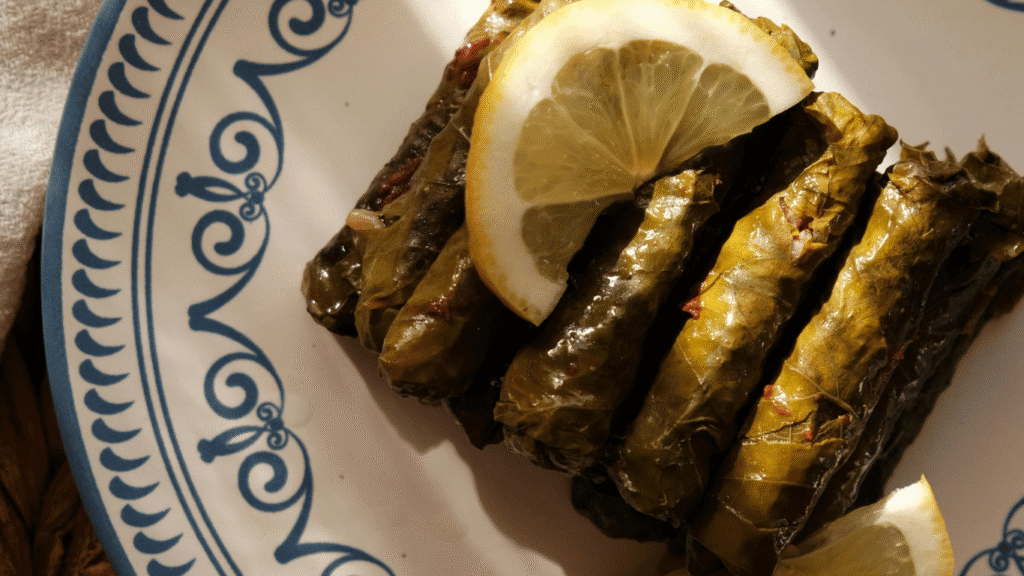
Small vine leaves stuffed with rice and herbs.
Heaven in one bite.
And I will tell you a little secret. You can find delicious ντολμαδάκια in cans at supermarkets. Because let’s be real, they are not easy or quick to make. They are my easy solution during fasting.
4. Γαρίδες (Garídes) – Shrimps
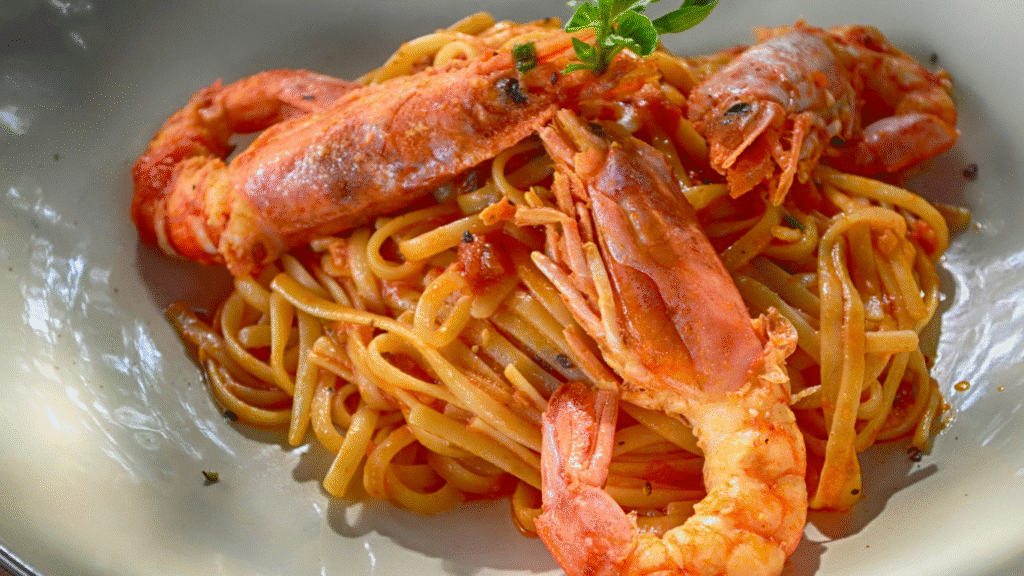
Γαρίδες cooked in many ways. Boiled, fried, saganaki, with risotto, with spaghetti.
They are one of the most common seafood dishes on Clean Monday tables.
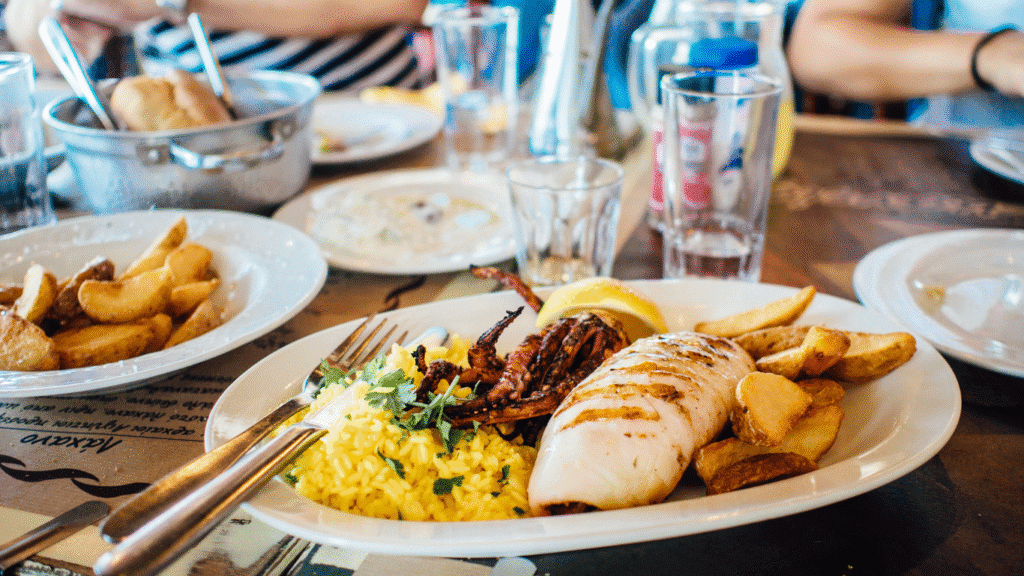
5. Καλαμαράκια (Kalamarákia) – Squid
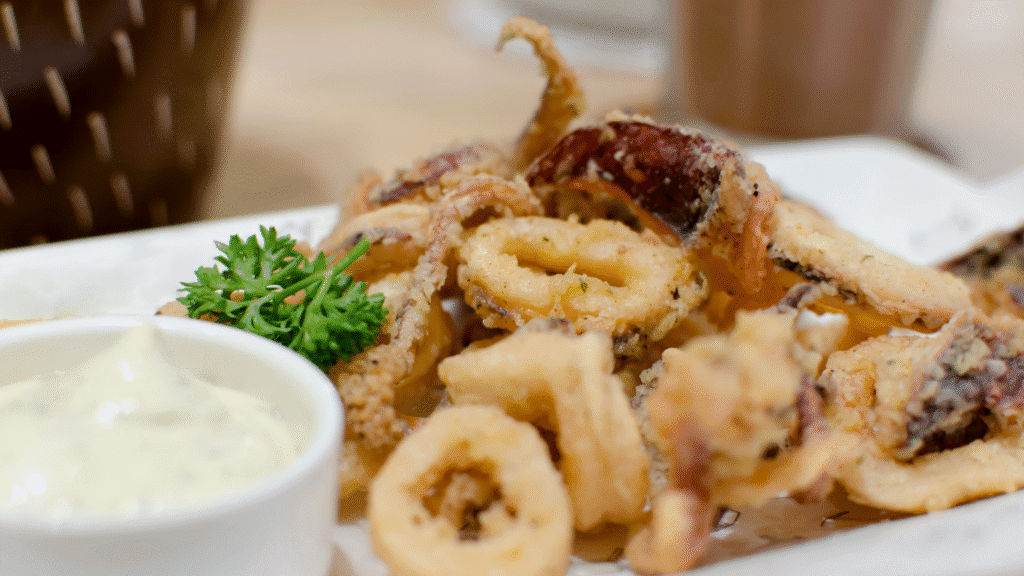
Can καλαμαράκια be missing from the Greek table?
Of course not.
Especially fried, they are one of the most popular dishes on Clean Monday and, between us, every other day too.
6. Μύδια (Mýdia) – Mussels
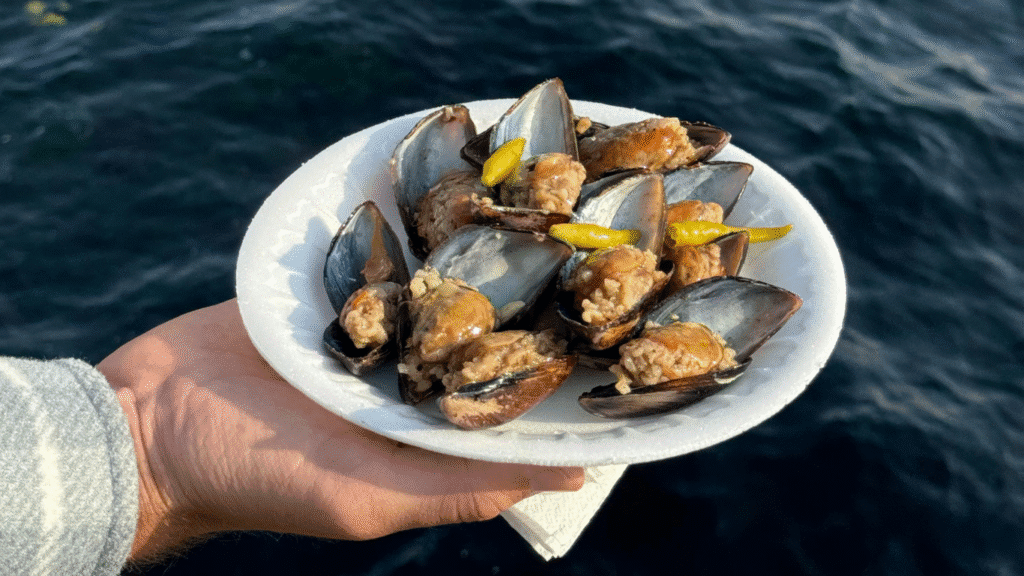
Ok, now we’re talking about my personal favorites.
You can find them cooked in many ways, like shrimps. But my personal favorite is spaghetti with mussels. I could cook it every day.
Drop a comment if you would like me to post my recipe.
7. Σουπιές με σπανάκι (Supies me spanáki) – Cuttlefish with spinach
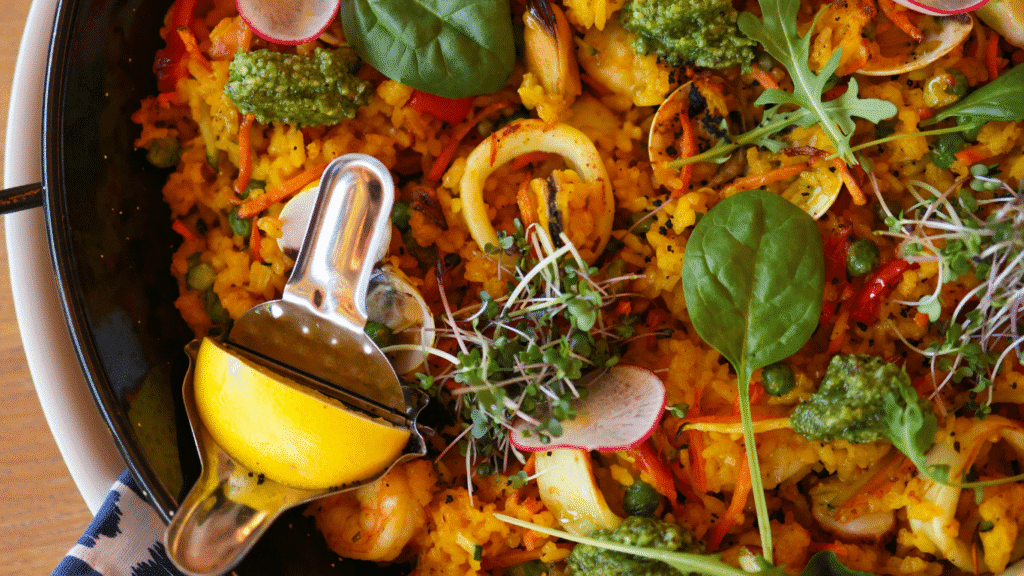
This screams a classic dish and is very popular on Clean Monday.
Cuttlefish cooked slowly with spinach and herbs
8. Χταπόδι (Htapódi) – Octopus
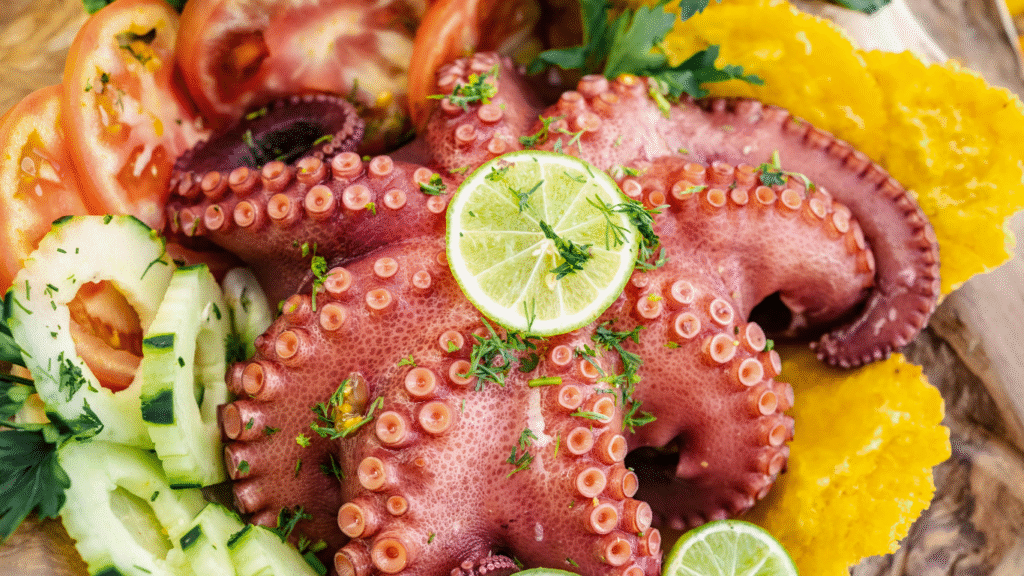
If you don’t eat χταπόδι on Clean Monday when when are you going to eat it?
Also every other day because it’s delicious, ok, yeah. I can take that as a correct answer too.
9. Χαλβάς (Halvás) – Halva
We opened with the queen of the table and we close with the king of the sweets. Yes, χαλβάς.
Σησαμένιος χαλβάς (Sisaménios halvás) – Sesame halva is the most traditional type. It is made mainly from sesame paste (tahini) and sugar, and it is one of the most typical desserts of Lent. You’ll often find it plain or with almonds, cocoa, or vanilla.
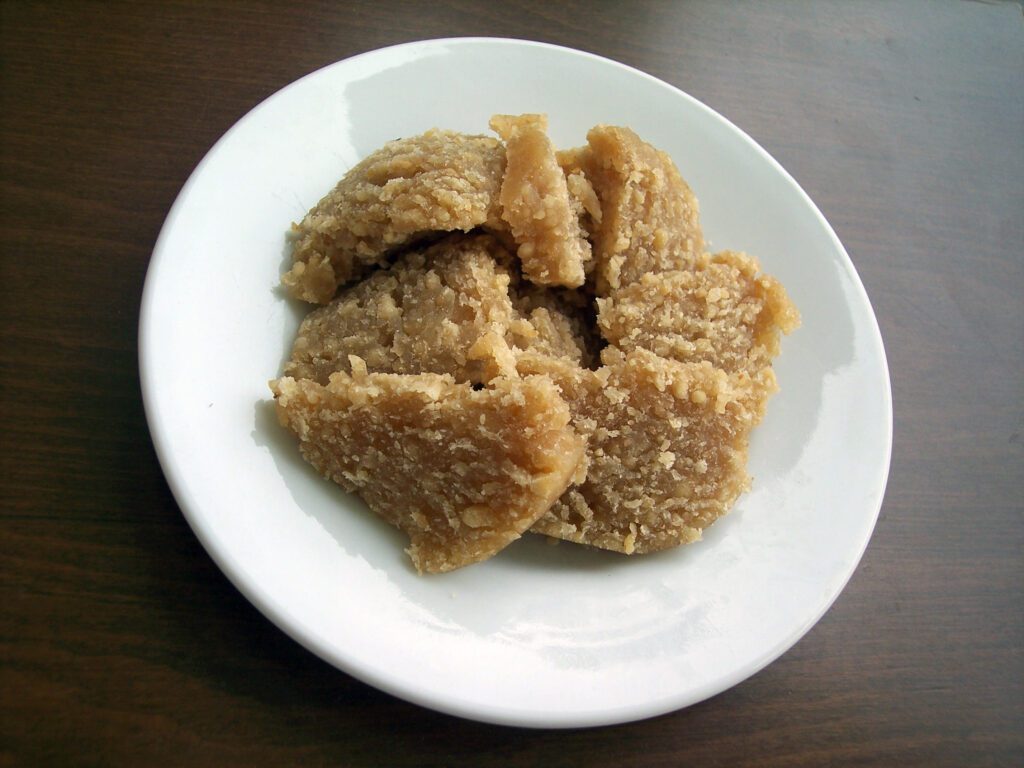
Another very popular version is σιμιγδαλένιος χαλβάς (simigdalenios halvás) – Semolina halva, a homemade sweet made with semolina, olive oil, and sugar syrup. Many families prepare it during Lent because it contains no dairy products.
These are just some of the things you’ll see Greeks eating during the day. Greek cuisine is so rich that many tables also include dishes like φάβα (fáva – yellow split pea purée), φακές (fakés – lentils), ρεβύθια (revýthia – chickpeas), φασολάδα (fasoláda – bean soup), and τουρσί (toursí – pickled vegetables). And of course, there are always ελιές (eliés – olives).
Where Do Greeks Celebrate Clean Monday?
But where do Greeks eat all this stuff?
Greeks love home gatherings and Clean Monday is a perfect excuse for families to reunite and spend time together. After all, what is better than being surrounded by family and friends in front of a table full of food?
Tavernas, especially fish taverns near coastal areas, are always full on this day. Don’t feel like cooking? Just go outside, but remember to make a reservation days before.
Many municipalities also organize public celebrations with music, food, and wine.
Clean Monday is also a great excuse for an excursion and since it’s after a weekend a lot of Greeks go to their villages to celebrate the end of the Carnival and Clean Monday, or see it as a great opportunity for a one-day trip.
Why Do Greeks Fly Kites on Clean Monday?
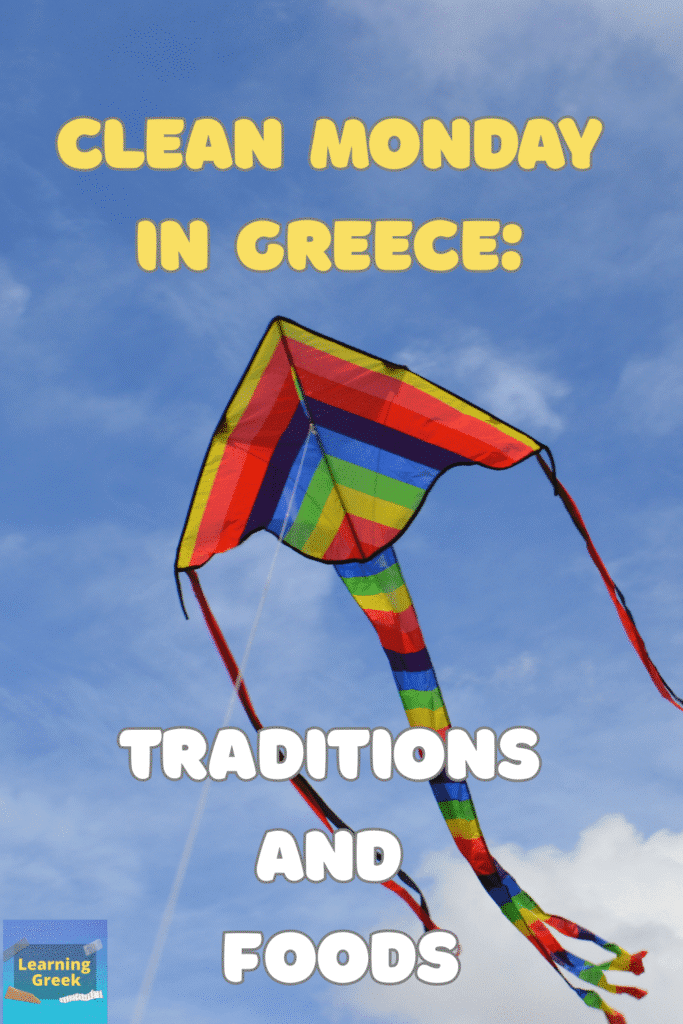
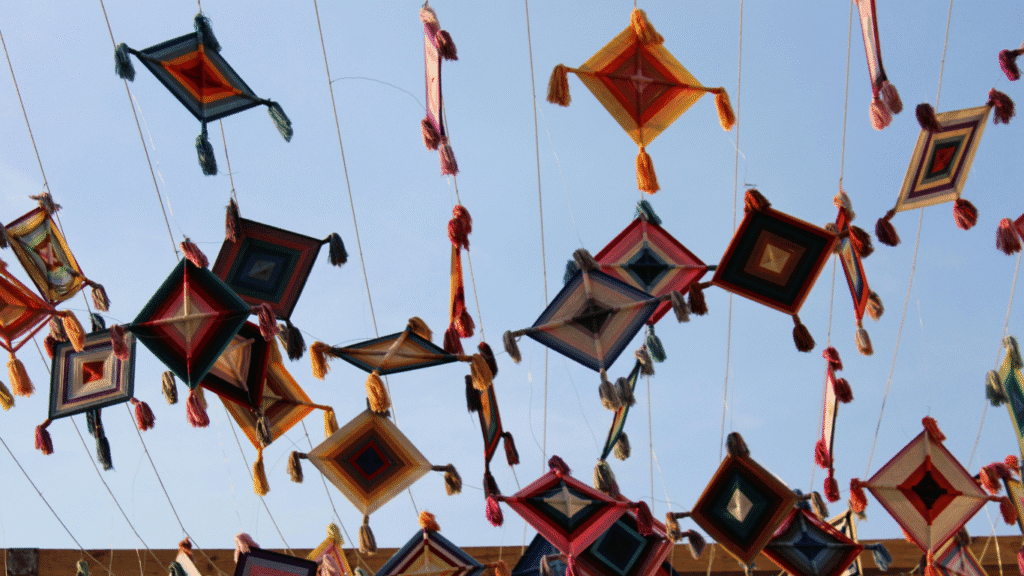
One of the strongest traditions of the day is the flying of the kite.
You will see children everywhere trying to fly their kites and competing to see which kite will go higher and stay longer.
The anxiety is common on this day.
Will the weather be good enough for the kite to fly?
I know I had that anxiety as a kid.
But flying a kite is not just a game.
It symbolizes the rising of the human soul toward the divine.
Flying kites has its own expressions. Some of the most popular ones are:
– αμολάω τον αετό (amoláo ton aetó) – let the kite go higher
– μαζεύω καλούμπα (mazévo kalúmba) – pull the kite down

Traditions Around Greece
Different regions of Greece celebrate Clean Monday in their own unique ways.
In Galaxidi, people take part in the famous Flour War, throwing colored flour at each other in a playful street battle.
In Thiva, the traditional Vlach Wedding is reenacted with music, costumes, and a festive procession through the town.
In Methoni, locals celebrate Koutroúlis’ Wedding, a humorous mock wedding that dates back centuries.
In Tyrnavos, the Bourani festival includes a symbolic fasting soup and playful teasing connected with fertility traditions.
On Karpathos, a traditional folk court humorously judges people for their “misbehavior” during Carnival.
On Naxos, men dressed as Kordelátoi wear traditional costumes decorated with ribbons and lead the celebrations.
On Skyros, the Trawler tradition includes satirical verses and traditional dances in the main square.
A Closing Note for Clean Monday in Greece
Clean Monday is one of the most beautiful traditions in Greece because it combines food, family, nature, and faith.
If you ever visit Greece during this period, try to experience a real Clean Monday with locals. Fly a kite, taste lagana and taramosalata, and don’t forget to wish everyone:
Καλή Σαρακοστή!
Key Vocabulary
Expressions
Καλή Σαρακοστή (Kalí Sarakostí) – Happy Lent
Καλά Κούλουμα (Kalá Koúlouma) – Have a great Clean Monday
Tο πέταγμα του χαρταετού (to pétagma tou hartaetou) – kite flying
Αμολάω τον αετό (Amoláo ton aetó) – I let the kite go
Αμόλα καλούμπα (Amóla kalúmba) – Let go of the kite string!
Μαζεύω καλούμπα (Mazévo kalúmba) – I pull the kite string in
Words
η Καθαρά Δευτέρα (i Kathará Defterá) – Clean Monday
Τα κούλουμα (ta koúlouma) – Clean Monday celebrations / picnic
η Σαρακοστή (i Sarakostí) – Lent
η νηστεία (i nisteía) – fasting
η λαγάνα (i lagána) – lagana bread
η ταραμοσαλάτα (i taramosaláta) – taramosalata
ο ταραμάς (o taramás) – fish roe
ο χαρταετός (o hartaetós) – kite
η καλούμπα (i kalúmba) – kite string spool
ο χαλβάς (o halvás) – halva