
This is a guest post by Elias Salasidis, creator of Flavors & Balance.
The Greek Table: Feeds More Than Hunger
When friends ask me, “Elias, I’m going to Greece for vacation — what should I eat so I don’t lose my progress?” I always give them the same answer: Stop looking for a main course.
Most people walk into a Greek taverna searching for a giant plate of moussaka or a heavy pasta dish. They treat the meal like a transaction. Order. Eat. Leave.
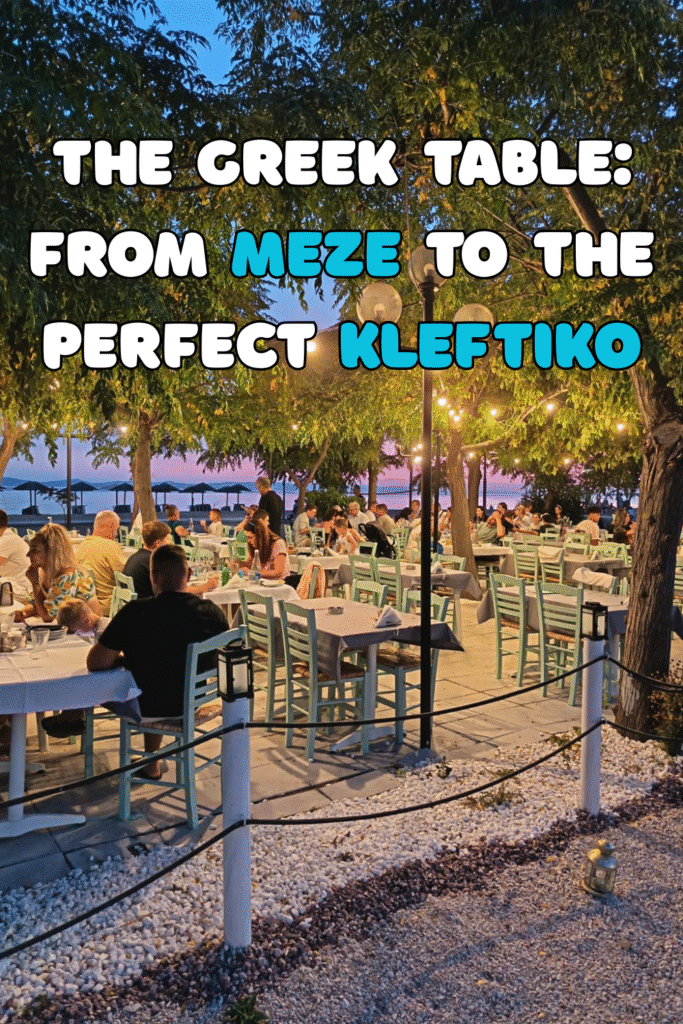
But in Greece, the table is a conversation. We don’t have “portions.” We have parea (παρέα) — the company of friends. And we have meze (μεζέ).
The Magic of Greek Meze Culture
It is like a secret weapon for health. When you order five or six small plates for the middle of the table, something important happens. You get acidity from lemon, healthy fats from olive oil, protein from the seafood or legumes, and vegetables cooked simply. Your body receives a variety of signals that say, “I’m satisfied,” long before you feel stuffed.
You eat slower because you’re sharing. You enjoy more because you’re tasting. This is what I call The “Slow Satisfaction” or the “Meze Ritual” (Η ιεροτελεστία του μεζέ). Not restraint. Not discipline. Just slow rhythm.
The Elias Selection: 10 Must-Try Mezedes
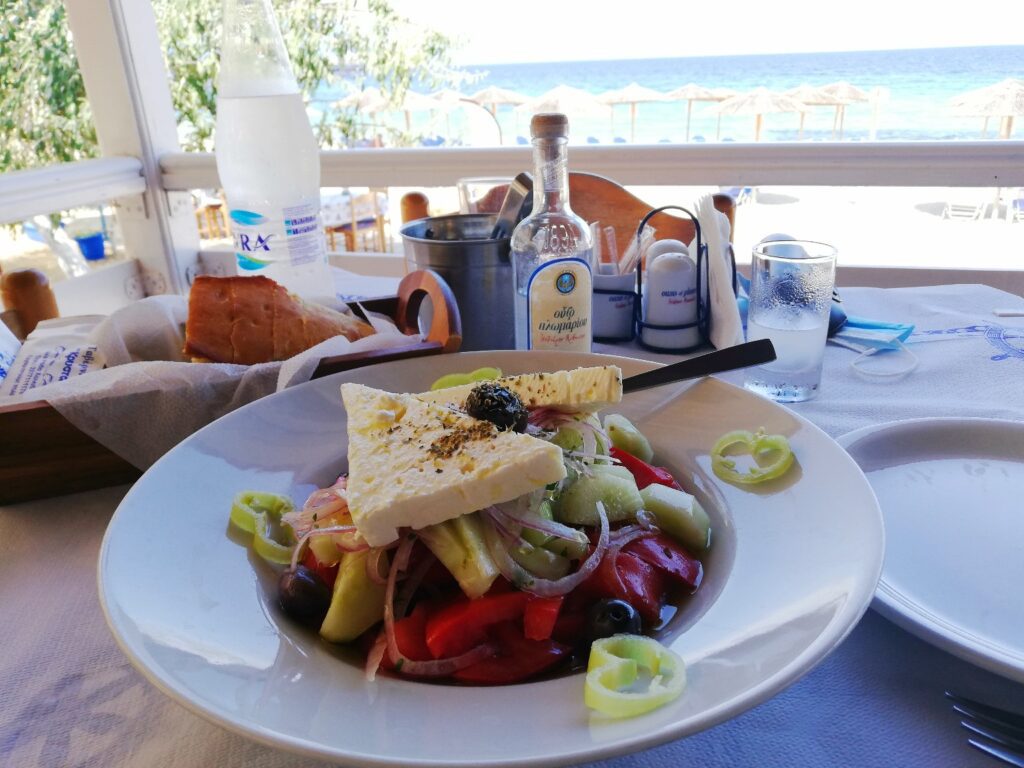
If you want to feel light, energized, and full — without turning your vacation into a diet — here’s how I suggest you order. Pick three or four for the table, depending on appetite.
- Tzatziki (Τζατζίκι): The foundation. Greek yogurt, garlic, cucumber. Cooling, protein-rich, grounding.
- Grilled Octopus (Χταπόδι ψητό): Pure protein with smoke and char. Flavor without heaviness.
- Fava (Φάβα): Yellow split pea purée. High in fiber, deeply satisfying.
- Horta (Χόρτα): Wild seasonal greens with lemon and olive oil. Simple, cleansing, essential.
- Gavros Marinatos (Γαύρος μαρινάτος): Anchovies cured in vinegar. Sharp, fresh, alive.
- Melitzanosalata (Μελιτζανοσαλάτα): Roasted eggplant dip. It should taste of smoke and garlic, not mayonnaise.
- Mydia Saganaki (Μύδια σαγανάκι): Mussels gently cooked in tomato and feta. Clean seafood, not fried.
- Kolokythokeftedes (Κολοκυθοκεφτέδες): Zucchini fritters. If they’re fried, enjoy them. If you want them lighter, make them baked at home.
- Dakakia (Ντακάκια): Barley rusks with tomato and mizithra. Slow-release carbohydrates that actually satisfy.
- Gigantes (Γίγαντες): Giant beans baked in tomato sauce. Proof that you don’t need meat to feel complete.
This is how Greeks eat when they want to enjoy food and still feel good afterward.
From Many Plates to One Dish
After all this talk about shared plates and mezedes, it may sound strange to end with a single dish. But Greek food has never been about how many plates are on the table. It’s about care.
When Greeks cook, they cook with meraki — attention, patience, and the responsibility to please the people they’re feeding. Even one dish is cooked as if it belongs in the middle of the table. Especially one dish.
And this is exactly what Lamb Kleftiko represents. Kleftiko is not a “main course” in the modern sense. It is slow food in its purest form. Sealed, quiet, and left alone to do its work. You don’t interfere. You trust it. You give it time. Just like a Greek meal. Just like a Greek “table” (trapezi).
So if I’m going to talk to you about Greek gastrimargia — the pleasure of eating — this is the dish I want to leave you with.
Lamb Kleftiko (Κλέφτικο)
The original sealed method — simple, honest, deeply satisfying.
Kleftiko comes from κλέφτης (thief). Historically, stolen lamb was cooked hidden underground, sealed so no smoke would give it away. What mattered was patience and silence. That logic remains today.

Ingredients
(Serves 4–6, for the center of the table)
- 1.8–2 kg lamb (shoulder or leg), cut into large pieces
- Salt & freshly ground black pepper
- Dried oregano (ρίγανη)
- 4–5 garlic cloves, whole or lightly crushed
- 1–2 tbsp water or white wine
- Parchment paper and aluminum foil
Method
1. Prepare the lamb
- Place the lamb in a bowl.
- Season generously with salt, pepper, and oregano.
- Add the garlic and rub everything well. No oil is needed — the lamb cooks in its own fat.
2. Seal the packet
- Lay out a large sheet of parchment paper.
- Place the lamb in the center, add the splash of water or wine, and seal it very tightly. Fold and crimp the edges so no steam escapes.
- Wrap the parchment in foil to secure the seal.
3. Oven setup
- Place the packet on an oven rack, with a tray underneath to catch any drips. This allows even heat circulation.
4. Slow cooking
- Cook in a preheated oven at 160–170°C for 3 to 3½ hours. Do not open the packet. Let time do the work.
5. Serve
- Bring the sealed packet to the table. Open it carefully. The aroma is part of the meal.
Enjoy the 5 km/h Life
In Greece, we don’t rush. We walk to the taverna. We sit. We talk. We eat. And we walk back.
Don’t come to Greece to diet. Come to learn how to eat again. The best flavors — and the best moments — happen when you slow down.
A Final Note: If you search online, you’ll find many versions of Kleftiko with potatoes, vegetables, or cheese. Those are tasty interpretations, but this version stays closest to the original technique and the principles of satiety. Slow food. Honest food. Κλέφτικο, the way it began.
About the Author
Elias is the creator of Flavors & Balance, a project born from years spent cooking, eating, and running his own restaurant on Skiathos island. After losing 17kg without diets or nutritionists, he became interested not in rules, but in satiety — how real food can keep people full, calm, and consistent. His writing focuses on simple cooking, Greek and Balkan food culture, and the quiet habits that help people step out of the diet cycle. Everything he shares is free and practical.
Flavors & Balance is published in English, Greek, and Romanian.
More writing by Elias is available on his project, Flavors & Balance.:
Flavors & Balance