
Adjectives play a crucial role in enhancing any language, allowing us to add detail and depth to our descriptions.
In Greek, the difference between using a basic adjective and a more advanced one can significantly elevate the tone of your speech or writing.
Whether you’re describing a person, place, or feeling, knowing both simple and sophisticated adjectives gives you the ability to express yourself more precisely and elegantly.
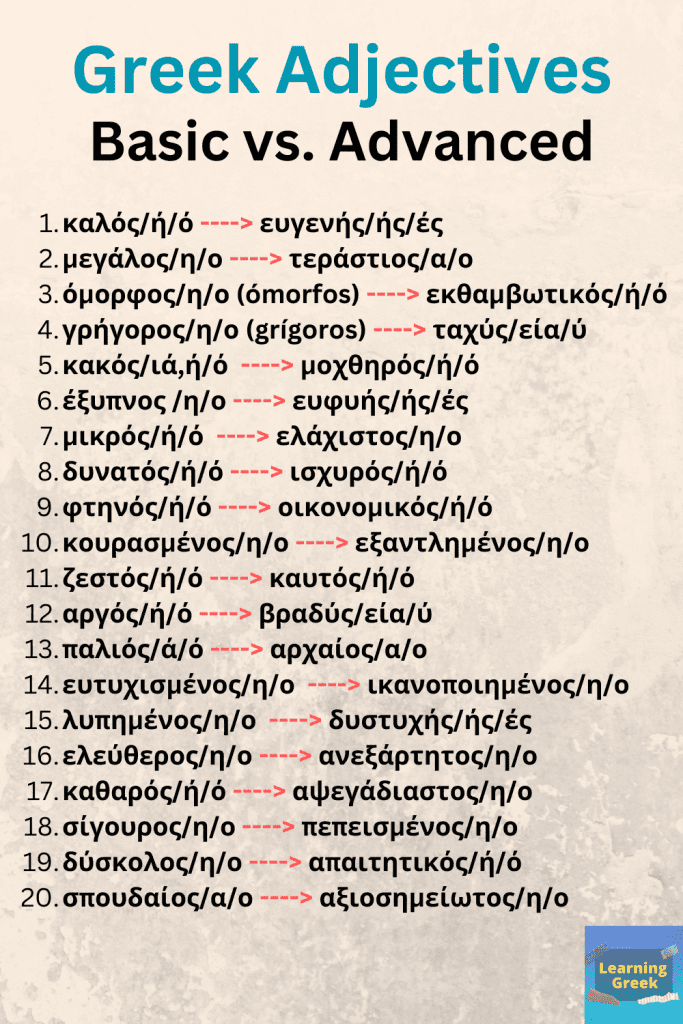
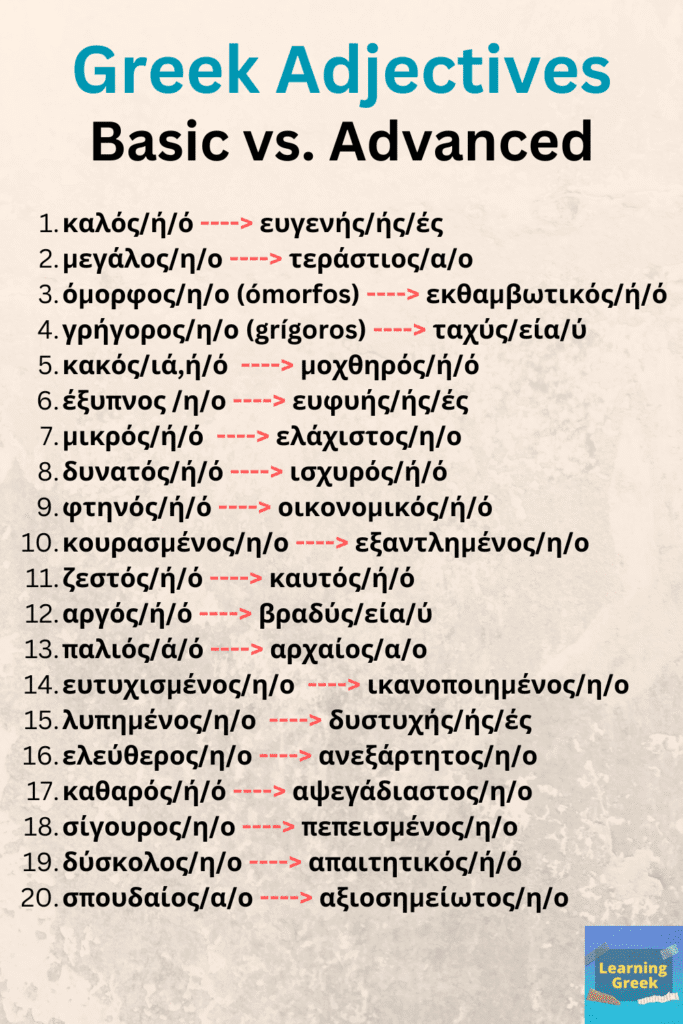
Below is a comparison of some common basic Greek adjectives with their advanced alternatives.
By integrating these into your vocabulary, you can instantly enrich your language skills and create more vivid and accurate descriptions.
| Basic Adjective | Advanced Adjective | Meaning (English) |
|---|---|---|
| καλός/ή/ό (kalós) | ευγενής/ής/ές (evyenís) | good / kind |
| μεγάλος/η/ο (megálos) | τεράστιος/α/ο (terástios) | big / enormous |
| όμορφος/η/ο (ómorfos) | εκθαμβωτικός/ή/ό (ekthamvotikós) | beautiful / stunning |
| γρήγορος/η/ο (grÉegoros) | ταχύς/εία/΄ύ (tachίs) | fast / swift |
| κακός/ιά,ή/ό (kakós) | μοχθηρός/ή/ό (mochthirós) | bad / malicious |
| έξυπνος /η/ο (éxipnos) | ευφυής/ής/ές (efΕeís) | smart / intelligent |
| μικρός/ή/ό (mikrós) | ελάχιστος/η/ο (eláchistos) | small / minimal |
| δυνατός/ή/ό (dynatós) | ισχυρός/ή/ό (ischirós) | strong / powerful |
| φτηνός/ή/ό (ftinós) | οικονομικός/ή/ό (Eekonomikós) | cheap / economical |
| κουρασμένος/η/ο (kurasménos) | εξαντλημένος/η/ο (exantliménos) | tired / exhausted |
| ζεστός/ή/ό (zestós) | καυτός/ή/ό (kaftós) | warm / scorching |
| αργός/ή/ό (argós) | βραδύς/εία/ύ (vradίs) | slow / sluggish |
| παλιός/΄ά/ό (paliós) | αρχαίος/α/ο (archaíos) | old / ancient |
| ευτυχισμένος/η/ο (eftichisménos) | ικανοποιημένος/η/ο (ikanopΕeiménos) | happy / satisfied |
| λυπημένος/η/ο (lipiménos) | δυστυχής/ής/ές (distichís) | sad / unfortunate |
| ελεύθερος/η/ο (eléftheros) | ανεξάρτητος/η/ο (anexártitos) | free / independent |
| καθαρός/ή/ό (katharós) | αψεγάδιαστος/η/ο (apsegádhiastos) | clean / flawless |
| σίγουρος/η/ο (síguros) | πεπεισμένος/η/ο (pepEesménos) | sure / convinced |
| δύσκολος/η/ο (dÉeskolos) | απαιτητικός/ή/ό (apetitikós) | difficult / demanding |
| σπουδαίος/α/ο (spudéos) | αξιοσημείωτος/η/ο (axiosimíotos) | important / remarkable |
Always remember:
When working with adjectives in Greek, it’s important to remember that adjectives must agree in gender, number, and case with the noun they describe. Greek adjectives typically have three forms, one for masculine, one for feminine, and one for neuter. For example, the adjective for “beautiful” can be:
- Masculine: όμορφος (ómorfos)
- Feminine: όμορφη (ómorfi)
- Neuter: όμορφο (ómorfo)
Always ensure the adjective matches the gender of the noun it modifies!
Conclusion:
By shifting from basic to advanced adjectives, you can greatly enhance your ability to describe people, objects, and experiences in Greek.
Not only will you be able to communicate more effectively, but your language will also sound more sophisticated and polished.
Practice using these advanced adjectives in conversations, and watch your Greek skills grow stronger!