
Hello, dear Greek music and Eurovision enthusiasts!
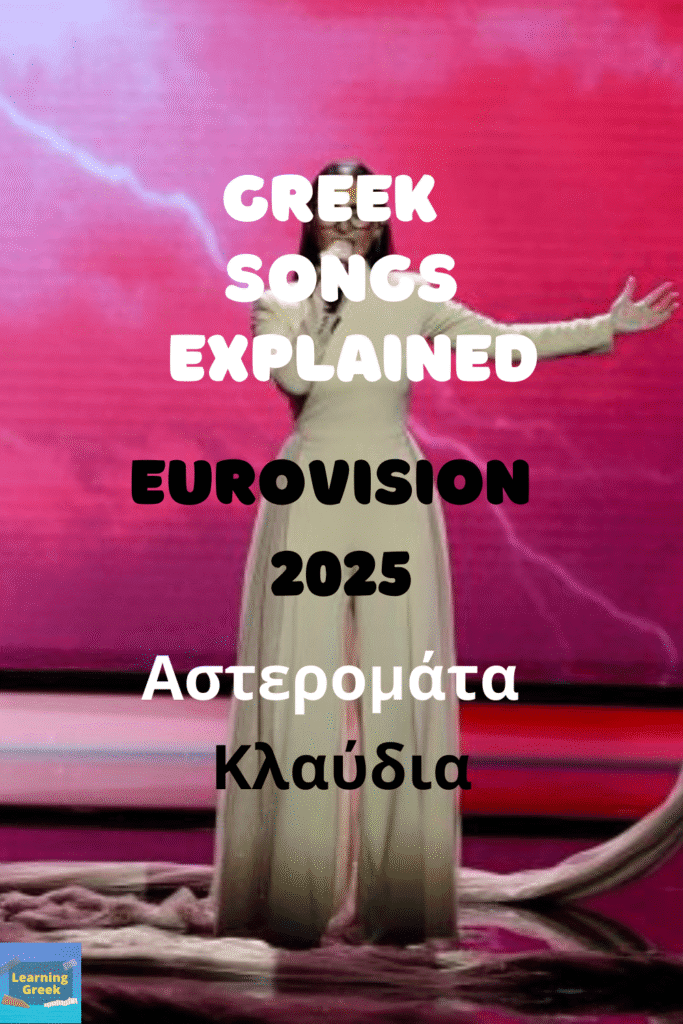
Greece has a history of delivering emotionally powerful and culturally rich songs to the Eurovision Song Contest. This year, Klavdia’s Asteromata (Αστερομάτα) has captivated audiences with its haunting melody, poetic lyrics, and deeply moving story of displacement and longing.
Rooted in history and memory, Asteromata is not just a song—it is a tribute to those who lost their homeland and were forced to search for a new beginning.
In this article, we’ll dive deep into the meaning behind this beautiful and emotional song, exploring its lyrics, symbolism, and the cultural history it represents.
The Starry-Eyed One: A Song of Exile and Memory
At its heart, Asteromata is a song about uprootedness, loss, and the undying connection to one’s homeland. The term asteromata is a traditional expression from Smyrna, used to describe women with radiant, striking eyes. In the song, it becomes a powerful symbol of love, longing, and remembrance.
Musically, Asteromata blends traditional Greek and Pontic elements with modern orchestration, creating an ethnic sound that resonates deeply with its theme. Klavdia’s ethereal vocals, combined with the song’s haunting melody, transport listeners to a place where the past and present intertwine—where the echoes of history still linger in the soul.
Discover Asteromata Through My TikTok Video
To start things off, here’s a quick glimpse of Asteromata through my TikTok video, where I explore the heart of the song and share its powerful message. It’s a short, impactful snippet from the track that captures the essence of the song’s emotional journey.
Exploring the Lyrics
Below, you’ll find the full lyrics of Asteromata with their English translation:
| Greek Lyrics | English Translation |
|---|---|
| Αστέρι μου, Αστέρι μου | My star, my star |
| Γλυκιά μου μάνα μην μου κλαις | My sweet mother, don’t you cry |
| Μαύρα και αν σου φορούνε | Even if they dress you in black |
| Το ξέθωρο το σώμα μου | My withered body |
| Φλόγες δεν το νικούνε | Flames cannot defeat it |
| Τα χελιδόνια της φωτιάς | The swallows of fire |
| Θάλασσες και αν περνούνε | Even if they cross the seas |
| Του ριζωμού τα χώματα | The soil of the roots |
| Ποτέ δεν λησμονούνε | They never forget |
| Αστερομάτα μου μικρή | My starry-eyed little one |
| Γύρε να σε φιλήσω | lean to kiss you |
| Στα άγια σου τα δάκρυα | In your sacred tears |
| Τα χείλη μου να σβήσω | to wipe my lips |
| Αστερομάτα μου μικρή | My starry-eyed little one |
| Γύρε μου να σε πιάσω | lean to hold you |
| Τα ξεχασμένα μου φτερά | My forgotten wings |
| Στερνά να ξαποστάσω | To rest at last |
| Αχ αστέρι μου, τζιβαέρι μου | Ah, my star, my treasure |
| Γλυκιά μου μάνα μην μου κλαις | My sweet mother, don’t you cry |
| Καράβι είναι η ζωή μου | My life is a ship |
| Που ψάχνει για τον γυρισμό | Searching for its return |
| Αγέρα το πανί μου | The wind is my sail |
| Αστερομάτα μου μικρή | My starry-eyed little one |
| Γύρε μου να σε πιάσω | Lean to hold you |
| Τα ξεχασμένα μου φτερά | My forgotten wings |
| Στερνά να ξαποστάσω | To rest at last |
| Αχ αστέρι μου, τζιβαέρι μου | Ah, my star, my treasure |
| Αχ αστέρι μου, τζιβαέρι μου | Ah, my star, my treasure |
| Αστέρι μου | My star |
Verse-by-Verse Analysis
Verse 1: A Mother’s Sorrow
Γλυκιά μου μάνα μην μου κλαις
Ylikiά mu mána min mu kles
My sweet mother, don’t you cryΜαύρα και αν σου φορούνε
Mávra ke an su forúne
Even if they dress you in blackΤο ξέθωρο το σώμα μου
To xéthoro to sóma mu
My withered bodyΦλόγες δεν το νικούνε
Flóyes den to nikúnе
Flames cannot defeat it
In this first verse, a child pleads with their mother, asking her not to mourn their fate. The imagery of black clothing symbolizes grief, exile, and loss. The reference to the body being “withered” is a poignant symbol of physical and emotional decay, yet the defiant line “flames cannot conquer it” suggests resilience and an unyielding spirit.
Chorus: The Swallows of Fire
Τα χελιδόνια της φωτιάς
Ta chelidónia tis fotias
The swallows of fireΘάλασσες και αν περνούνε
Thálasses ke an pernúne
Even if they cross seasΤου ριζωμού τα χώματα
To rizomú ta chómata
The soil of the rootsΠοτέ δεν λησμονούνε
Poté den lismonúnе
They will never forget
Swallows are migratory birds, often associated with return and renewal. Here, they become “swallows of fire,” crossing the sea yet never forgetting the land they came from. This imagery evokes the Greek refugees of Asia Minor and the Pontic Greeks, forced to leave their homes yet always carrying their heritage with them.
Verse 2: A Starry Gaze
Αστερομάτα μου μικρή
Asteromáta mu mikrí
My starry-eyed little oneΓύρε να σε φιλήσω
Yire na se filíso
Lean to kiss youΣτα άγια σου τα δάκρυα
Sta áyia su ta dákria
On your holy tearsΤα χείλη μου να σβήσω
Ta hílī mu na svíso
To wipe my lips
The term Asteromáta refers to “starry-eyed,” which in Greek tradition signifies someone with captivating, luminous eyes. The verses express longing and love, with the starry eyes serving as a metaphor for something beautiful yet distant. The reference to holy tears highlights a sense of reverence and the deep, sacred connection to the subject.
Verse 3: Forgotten Wings
Αστερομάτα μου μικρή
Asteromáta mu mikrí
My starry-eyed little oneΓύρε μου να σε πιάσω
Yire mu na se piáso
Lean to hold youΤα ξεχασμένα μου φτερά
Ta xehasménа mu fterá
My forgotten wingsΣτερνά να ξαποστάσω
Sterná na xapostáso
Finally to rest
This verse conveys an emotional surrender, a desire for union, and the longing for a past that is no longer attainable. The wings symbolize freedom, aspirations, and the loss of mobility, suggesting the emotional pain of exile and the need for closure or rest after a long, difficult journey.
Bridge: A Precious Gem
Αχ αστέρι μου, τζιβαέρι μου
Ach astéri mu, tziváeri mu
Oh my star, my precious one
The word tziváeri (from Turkish cevahir) refers to a precious gem, and in this context, it metaphorically elevates the loved one (or homeland) to something invaluable and irreplaceable. The bridge emphasizes the deep affection and reverence the speaker feels for the object of their yearning.
Final Verse: A Ship Searching for Home
Γλυκιά μου μάνα μην μου κλαις
Ylikía mu mána min mu kles)
My sweet mother, don’t you cryΚαράβι είναι η ζωή μου
Karávi íne i zoí mu
My life is a shipΠου ψάχνει για τον γυρισμό
Pu psáchni yia ton girismó)
Searching for its returnΑγέρα το πανί μου
Ayéra to paní mu
The wind is my sail
The final verse compares the journey of life to a ship lost at sea, forever searching for its homeland. The wind represents fate, pushing the ship in uncertain directions, much like the lives of refugees or exiles, who are subject to forces beyond their control. The longing for “return” symbolizes the unfulfilled desire for a lost home, a common theme among displaced peoples.
Cultural Insights and Key Vocabulary
- Η Αστερομάτα ( i Asteromata) – Starry-eyed
A term used in Smyrna to describe women with luminous eyes, symbolizing beauty and nostalgia. - Το τζιβαέρι (to tzivaéri) – Treasure
Borrowed from Turkish (cevahir), meaning a precious gem. It is often used as an endearing term for a loved one. - Ο ριζωμός (o rizomós) – Rooting
Refers to one’s connection to their homeland. In the song, it represents the deep bond between refugees and the lands they were forced to leave. - Ο αγέρας (o ayéras) – Wind
Symbolizes fate, the unknown, and the forces that drive people’s journeys. - Οι φλόγες (i flóyes) – Flames
Represent destruction, loss, and resilience. In the song, the flames fail to destroy the spirit, emphasizing survival despite hardship.
Listen to the Full Song on YouTube
If the short video piqued your interest and you want to dive deeper into the full beauty of Asteromata, you can listen to the complete song on YouTube here:
Conclusion
Asteromata is more than just a Eurovision entry—it is a deeply emotional tribute to the displaced, the exiled, and those who carry their homeland in their hearts. With its ethereal sound, poetic lyrics, and historical depth, it stands as one of Greece’s most powerful contributions to the contest.
What are your thoughts on Asteromata? How does it make you feel? Let’s celebrate this hauntingly beautiful song and the stories it carries together!